| Content from Wikipedia under the CC BY-SA 4.0 license ⇔ Maps from OpenStreetMap under the ODbL license |
El Salvador
Republic of El Salvador | |
|---|---|
 Flag
 Coat of arms
| |
| Motto: "Dios, unión, libertad" ("God, Union, Liberty") | |
| Anthem: National Anthem of El Salvador | |
 | |
 | |
| Capital | San Salvador  |
| Largest city | San Salvador |
| Official languages | Salvadoran Spanish[lower-alpha 1] |
| Spoken languages | Languages of El Salvador[2] |
| Demonyms | Salvadoran Cuscatlecan |
| Member of | UN, OAS, SICA, ODECA, Rio Group, ACS, CIN, OEI, IAEA, ASALE, PARLACEN, G-77, Petrocaribe, Interpol, Parlatino, CACM, CCJ, SIECA, SELA |
| Government | Unitary presidential representative republic under an authoritarian government |
| Foundation | |
| 1200–1528 | |
| 1528–1540 | |
| 1540–1821 | |
| from Spain | |
• Declared | September 15, 1821 |
| July 1, 1823 | |
| June 12, 1824 | |
• Republic | February 2, 1841[3][4][5] |
• Recognized | June 24, 1865[6] |
| Area | |
• Total | 21,041 km2 (8,124 sq mi)[7] (148th) |
• Water (%) | 1.5 |
• Borders | 590 km total[7] • 391 km with Honduras[7] • 199 km with Guatemala[7] Coastline: 307 km[7] Highest point: Cerro El Pital |
| Population | |
• 2024 census | 6,379,925 (113th) |
• Density | 303/km2 (784.8/sq mi) |
| GDP (PPP) | 2025 estimate |
• Total |  US$85.231 billion[8] (105th) |
• Per capita | US$13,620[8] |
| GDP (nominal) | 2025 estimate |
• Total | US$37.425 billion[8] (101st) |
• Per capita | US$5,978[8] |
| Gini (2023) | 39.8[9] medium inequality |
| HDI (2023) | 0.678[10] Error: Invalid HDI value (132nd) |
| Currency | United States dollar ($, USD)/ Bitcoin (₿, XBT)/ Salvadoran colón (₡, SVC)[lower-alpha 2] |
| Time zone | UTC−6 (Central) |
| Calling code | +503 |
| ISO 3166 code | SV |
| Internet TLD | .sv |
ISO code: 222/SLV/SV Aircraft registration prefix: YS Vehicle registration code: ES Radio call sign prefix: HUA-HUZ, YSA-YSZ[12]
| |
El Salvador (in Nawat, Kuskatan or Kushkatan; in Salvadoran Lenca, Nekupú; and in Cacaopera, Tupáyka), officially the Republic of El Salvador, is a sovereign country in Central America, the smallest on the American continent, with coastline on the Pacific Ocean.[13] Its capital and most populous city is San Salvador.
El Salvador is the most densely populated country in continental America, with approximately 6.4 million inhabitants in 2024.[2] Its economy has been largely dollarized since 2001, and in 2021 it became the first country in the world to adopt Bitcoin as legal tender.[14]
Etymology
After the conquest of Tenochtitlan, Hernán Cortés sent the Adelantado Pedro de Alvarado to subdue the regions to the South of the Mexica Empire. The first region to be conquered was the territories that now make up Guatemala; while there, Pedro de Alvarado decided to make incursions into the lands to the east, territories that were subject to a kind of vassalage to the Lordship of Cuzcatlán. There, the Spaniards and their allies, the so-called friendly Indians, clashed with fierce inhabitants who put up bloody resistance, as happened at the Battle of Acajutla, as well as at the Battle of Tacuzcalco and the Battle of Cuzcatlán; all of this in 1524. Pedro de Alvarado returned to the newly founded City of Santiago de los Caballeros de Guatemala,[15] and the following year sent a group of Spaniards under the command of Gonzalo de Alvarado with express orders to found, in the Lordship (called a province by the Spaniards) of Cuzcatlán, a town with the name of San Salvador. However, the following year, due to attacks by the local inhabitants, the short-lived Villa de San Salvador was abandoned and its residents returned to Guatemala. It was not until 1528 that the Villa de San Salvador was refounded in the Valley of La Bermuda, 8 km south of the indigenous settlement of Suchitoto; from that moment on, the territory was called the Province of San Salvador (which in some documents is called the Province of San Salvador de Cuzcatán).
In 1530, another settlement of Spanish origin would be founded in the region, San Miguel de la Frontera, which would be the seat of its own province; this would join the Province of San Salvador, forming around 1578 the Alcaldía Mayor of San Salvador. The seat of the authorities of the Alcaldía Mayor was established in what was by then the City of San Salvador, and its jurisdiction covered a large part of what is today the Salvadoran nation, with the exception of the present-day departments of Ahuachapán and Sonsonate (which would make up the Alcaldía Mayor of Sonsonate from 1540 onward). With this, a large part of the territory began to be identified by the name of Province of San Salvador; here lie the earliest origins of the name of this republic.[15][16][17]
Centuries later, with the implementation of the Bourbon Reforms in America, intendancies were created; these were well-defined political-administrative entities with a much strengthened authority. The former Alcaldía Mayor of San Salvador became the Intendancy of San Salvador in 1785, with its capital in the by then city of San Salvador. The creation of this intendancy would be very important for the future consolidation of the idea of a Salvadoran nation, since it allowed the elites of San Salvador to have a particular consciousness or identity, independent of Guatemala, which was viewed with suspicion.[16][17]
Around 1821, the Province of San Salvador was created in the territory of the Intendancy of San Salvador, with a Superior Political Chief and a Provincial Deputation, which gave it greater autonomy from Guatemala. This was the result of the restoration of the constitutional regime in Spain, which decreed that all intendancies would become provinces completely independent of any other authority, so as to have their own authorities.
On September 15, 1821, the Captaincy General of Guatemala declared its independence from Spain, a decision ratified by the rest of the provinces of the Kingdom of Guatemala.[16][17][18] Thus, throughout the entire period of Spanish rule in America, a large part of what is today El Salvador was identified by the name of Province of San Salvador.
But toward the end of 1823 and the beginning of 1824, the Alcaldía Mayor of Sonsonate (which was then part of the Province of Guatemala) decided to join the Province of San Salvador in order to found together the Salvadoran State as part of the United Provinces of Central America, proclaimed on July 1, 1823, which later, on November 22, 1824, would become the Federal Republic of Central America. Because of this union, to prevent the name from sounding like a State headed by the City of San Salvador, the first constituent assembly of the nascent State decided to change its traditional name.[16][18] Thus, as a result of the union of the provinces of Sonsonate and San Salvador, the official name "El Salvador" was accepted in the first Constitution of the State, promulgated on June 12, 1824. However, the custom of contracting the first word caused it to be written as "Estado del Salvador". Indeed, that same Magna Carta stipulated that the State would be called "Estado del Salvador" (Art. 7).[19][20] According to the historian Pedro Escalante Arce, the change from "San Salvador" to "Estado del Salvador" was made to distinguish between the capital city and the department, under the word "San", and the state, with the word "El", all before the term "Salvador". From its formation, the state would encompass both the Province of San Salvador and that of Sonsonate, which since 1823 has been part of the present-day Central American country.[21]
The State would keep this name throughout the existence of the Federal Republic of Central America and even after its disintegration. However, on February 2, 1841,[22] El Salvador officially left the Central American union, but it was not until January 25, 1859, that it made official its status as a free, sovereign and independent republic.[23] According to the Guatemalan historian Alejandro Marure, on January 30, 1841, a Constituent Assembly declared that the official name of the State would be República de San Salvador; but that name was never used, not even by the same Constituent Assembly that had established it.[24]
Around the beginning of the 20th century, by means of the Legislative Decree of June 7, 1915, published in the Diario Oficial No. 133, Volume No. 78, of June 9, 1915,[25] "El Salvador" was definitively established as the official name.[26] Despite this provision, in official international documents the practice of omitting the first part of the official name of the republic continued. Through the efforts of the Undersecretary of Culture, Jorge Lardé y Larín,[16] Legislative Decree No. 2737 of October 23, 1958 was issued, published in the Diario Oficial No. 210, Volume No. 181, of November 11, 1958,[27] which added to the text of June 7, 1915 the prohibition of suppressing the word "El" when it was associated with the words "República" or "Estado". Likewise, the right was reserved to reply to any document or to refuse to sign any agreement in which the official name of the republic appeared incorrectly written.[28] Thus, finally, the official name of this Central American country was consolidated as "República de El Salvador" (Republic of El Salvador).[29][30]
History
Pre-Hispanic era


Salvadoran territory forms part of the area of Mesoamerica, and is located in a region that served as a passageway for objects and ideas over time.[31]
The first cultural evidence in El Salvador dates back eight thousand years, precisely to the Archaic period (8000 to 1500 BC), an era of great migrations to various Mesoamerican areas, one of them on the Pacific coast of the country.[32]
In the Early (1500–900 BC) and Middle (900–500~400 BC) Preclassic period, groups settled whose culture was closely connected with that of Chiapas and the Pacific coast of Guatemala, and who were probably speakers of Proto-Mixe-Zoque or Proto-Zoque.[33] In the area of Chalchuapa, remains of ancient settlements dating from the Early Preclassic have been found; and for the Middle Preclassic, sites have also been found in places such as Jayaque or Antiguo Cuscatlán.[33][34]
In the Late Preclassic (500~400 BC–200~250 AD), Maya groups (whose language belonged to the Cholan group, the same one to which Ch'orti' belongs) settled in the western region, with broad cultural development and linguistic, sculptural and commercial relations with the highlands of Guatemala, as can be seen in Usulután pottery and obsidian.[33] In addition, all three zones of the country (western, central and eastern) were populated, and the construction of mounds increased in places such as Quelepa, Atiquizaya and El Trapiche.[35]
However, at the beginning of the Early Classic period (200~250–400 AD), a collapse occurred that led to the abandonment of Preclassic sites and the founding of new ones such as Tazumal;[36] while in Quelepa, populated by Lencas, there was notable progress and relations were established with populations of the highlands and of the south of the isthmus. At some point in the 4th or 5th century, the eruption of the caldera of Lake Ilopango occurred, which affected the populations of the west and center, which nevertheless recovered quickly.[37] One of these localities was Joya de Cerén, occupied in the 6th century, whose inhabitants were affected by the eruption of the Loma Caldera volcano; the area of Lake Güija was also an important place of exchange with western Honduras, the Motagua valley and Petén. Furthermore, in that era the Cacaoperas and Chorotegas settled in the eastern region.[38][35]
In the Late Classic period (600 to 950 AD), cultural development manifested itself in the construction of architectural complexes, the most representative being Tazumal, Cara Sucia, Quelepa and San Andrés.[39]
The Postclassic period (950–1521) is characterized by the migration of the Nahua peoples, who occupied an estimated three quarters of Salvadoran territory;[40] the first migrations took place in the Early Postclassic (900–1200), founding sites such as Cihuatan or expanding sites such as Tazumal, which would be abandoned at the end of that time;[41] after which, at the beginning of the Late Postclassic (1200–1521), the last migrations took place, those of the Nonoalca-Pipils.[40]
In this phase there was construction of engineering works and long-distance trade; at the same time, society was marked by stratification, the rule of a supreme ruler and the presence of military orders. The most important indigenous nucleus was the Lordship of Cuscatlán, which is considered the model of local development in this period.[40][42]
Viceregal era
In 1522, five Spanish ships set out from Panama to explore the coasts of the Pacific seaboard. The chief pilot was Andrés Niño, who named the Gulf of Fonseca and, on May 31, landed on an island he called "Petronila" (Meanguera).[43]
By June 1524 the conquistador Pedro de Alvarado crossed the Paz River with Spanish troops accompanied by Indian auxiliaries, and began the conquest of the present-day Salvadoran territory. In the following years the colonizers established various settlements: San Salvador, erected in 1525 but which had its definitive seat in 1545; San Miguel, whose first settlement arose in 1530 but which was not established in its definitive location until 1586; and the town of La Trinidad (Sonsonate), founded in 1553. The whole territory comprised the Alcaldías Mayores of Sonsonate and San Salvador, both part of the Kingdom of Guatemala. Alongside the Spanish conquest there also developed mestizaje, the process of Catholic evangelization, the teaching of the Spanish language, and the arrival of African slaves.[44][15]
Owing to the scarcity of gold and silver, the Kingdom did not have the preponderance of other American possessions, so it based its economy on agriculture. To create wealth, the labor of the indigenous people was exploited, as was the appropriation of land.[45] In addition, the natives, gathered into Indian towns,[46] were subject to tribute, and complaints of abuse of authority were not uncommon.
The Central American conquest had an initial stage of extraction of raw materials, followed by dependence on an export product: first it was cacao, whose cultivation on large plantations began in 1540 in the Salvadoran province, mainly in the Sonsonate region;[47][48] and afterwards the indigo dye, which from 1600 was of great importance for the economy of the Kingdom and of San Salvador in particular, since it was its main export product.[49]


To these goods were added iron from Metapán and also the so-called Balsam of Peru, whose export, as happened with indigo, continued after the end of Spanish rule.[50]
However, in this period there were factors that undermined the dynamism of the economy, such as the decline of the indigenous population due to disease, the overexploitation of natural resources resulting in poor harvests, recessions caused by different wars, and difficult communication routes, among others. In 1785, by virtue of the Bourbon Reforms, the Alcaldía Mayor of San Salvador became the Intendancy of San Salvador. Later, with the entry into force of the Spanish Constitution of 1812, and specifically with the decree of the Spanish Cortes Generales of May 8, 1821, the intendancy became the Province of San Salvador, which would have a political chief and its own provincial deputation.[17]
Independence and the Federal Republic


From the first decade of the 19th century, in the American possessions of the Spanish Crown, movements with pro-independence aspirations began to emerge. San Salvador was not unaffected by these events, since the economic and political situation was unfavorable for the inhabitants of the province. The local elite, made up of criollos and clergy, wished to achieve autonomy and shake off the dominance of the Guatemalan aristocracy, and so on November 5, 1811 an uprising broke out against the European authorities. The revolt, which was the first in the Kingdom, found no support among the authorities of the other towns, and therefore ended in failure. However, another uprising would take place in 1814. The government of the Captaincy managed to keep the rebels under control until 1821, when news reached the region of the signing of the Plan of Iguala in the Viceroyalty of New Spain, and of the proclamation of independence of Ciudad Real; this prompted the pro-independence faction to pressure the political chief Gabino Gaínza to convene the Provincial Deputation and sign the Act of Independence, which took place on September 15.[51]
The states of the Isthmus, from Panama to Guatemala, will perhaps form a confederation. This magnificent location between the two great oceans could, in time, become the emporium of the world. Its canals will shorten distances, strengthen commercial ties with Europe, America and Asia, and bring to that fortunate region tributes from all the world. Perhaps one day the capital of the world will be located there, just as Constantine the Great claimed that Constantinople was the capital of the ancient world.
— Simón Bolívar, On the potential of an independent Central American nation, in the Jamaica Letter (1815)[52][53]
However, even though the Act stipulated the convening of a congress to decide on the government of the provinces, the Guatemalan authorities and supporters of the Plan of Iguala arranged the annexation to the Mexican Empire on January 5, 1822. The Salvadoran faction opposed the decision because of its republican ideas,[54] but could not prevent San Salvador from being annexed to the Empire, although only for a short time, since Agustín de Iturbide would abdicate the throne. On July 1, 1823, the absolute independence of the former provinces of the Kingdom of Guatemala was proclaimed; they came to be called the United Provinces of Central America, whose Constituent Assembly was presided over by José Matías Delgado. At the end of that year and the beginning of 1824, the Alcaldía Mayor of Sonsonate and later the town of Ahuachapán were annexed to the Salvadoran province.[55]
The Federal Republic of Central America was constituted on November 22, 1824, and the State of El Salvador was one of its five States. Nevertheless, on June 12 of that same year the Salvadorans had hastened to issue their own constitution, to counter any threat from Guatemalan centralism.[56]
Despite the federal regime, the old rivalry still prevailed in the territory between the provincials, who wished to maintain their autonomy even from the federal power itself, and the Guatemalan conservatives, who sought to preserve their hegemony in the region. This antagonism, added to the precarious economy, deficient communication systems and a fragile armed force, hampered the existence of the Republic to the point of causing two civil wars, in 1826–1829 and 1830–1842. An indigenous uprising led by Anastasio Aquino also took place in El Salvador.[57]
With the exile of Francisco Morazán in 1840 (a Central American president who had supporters in El Salvador and who strove to implement extreme liberal measures in the nation), the Federal Republic came to an end. On February 2, 1841, El Salvador proclaimed itself a sovereign and independent State.[57]
The coffee republic
After the dissolution of the union, there followed a period of struggles between liberals and conservatives that lasted until 1871. In this period, the cultivation of indigo declined and that of coffee was introduced, which was promoted during the administration of Eugenio Aguilar,[58] and intensified in that of Captain General Gerardo Barrios.[59]
At the end of the 19th century, El Salvador went through a period of internal discord. In 1871, Santiago Gonzales took power through a military coup. General Francisco Menéndez did the same in 1885, Carlos Ezeta in 1890, General Rafael Antonio Gutiérrez in 1894, and General Tomás Regalado in 1898.[60][61] However, these changes in power were fought out between networks of rival landowners (coffee barons) and politicians under their patronage, rather than between official military and government forces.[62]
Between 1871 and 1931 there was a succession of liberal governments that favored the interests of the nascent elite linked to coffee cultivation. In 1881 and 1882, during the presidency of Rafael Zaldívar, the Legislative Assembly decreed two laws abolishing communal and ejido lands, which were sold to private individuals, causing an abrupt change in land tenure.[61]
With the Ley de Extinción de Comunidades (Law for the Extinction of Communities), approved by the Legislative Decree of February 15, 1881, published in the Diario Oficial No. 49, Volume No. 10, of February 26, 1881,[63] it was argued that "the division of lands possessed by communities impedes the development of agriculture, hinders the circulation of wealth and weakens the bonds of the family and the independence of the individual" and that "such a state of affairs must cease as soon as possible as contrary to the economic, political and social principles that the Republic has accepted".[64] And for its part, with the Ley de Extinción de Ejidos (Law for the Extinction of Ejidos), approved by the Legislative Decree of March 2, 1882, published in the Diario Oficial No. 62, Volume No. 12, of March 14, 1882,[65] it was maintained that one of the greatest obstacles to the development of agriculture "is the ejido system, inasmuch as it nullifies the benefits of property in the largest and most important part of the lands of the Republic, which are devoted to crops of negligible value or wholly abandoned, owing to the precariousness of the right of their possessors, keeping these in isolation and apathy and insensible to all improvement" and that "although the direct ownership of said lands belongs to the nation by pre-existing laws, it is not just to deprive the municipalities of their use and enjoyment without prior compensation".[66]
From 1898, with the rise to power of General Tomás Regalado, until 1931, a series of stable governments followed one another. The presidency remained in the hands of the great coffee landowners; the economic elite governed the country, passing the presidency directly among themselves. This historical period is known as the "Coffee Republic". This part of history brought great progress toward consolidating a coffee nation-state, while investment was made in infrastructure. In 1908 railways were built to link the coffee zones with the port of Acajutla. To provide rapid communication between the western and eastern parts of the country, the "Golden Bridge" was built over the Lempa River. American financing and investment gradually displaced the British. Alliance with the oligarchy and with the agricultural bourgeoisie was the policy the United States followed to expand its political and economic dominance in the region, and at the same time a method for displacing British capital.[67][61]
Manuel Enrique Araujo, president between 1911 and 1913, created the National Guard and took a series of measures to increase the presence of the State in the interior of the country. The country's current flag and coat of arms were adopted in 1912 during the presidency of Araujo, who was assassinated in February 1913. After Araujo's assassination, the powerful Meléndez-Quiñónez family governed the country until 1927; they were members of the economic elite known as the 14 Families (a number that is evidently symbolic, for the fourteen departments) or Criollo Oligarchy, as they were direct descendants of Spaniards born in the country. Besides these families there were also the Dueñas, the Araujo, the Orellana, the Álvarez, Meza-Ayau, the Quiñones, the Molina, the Regalado and the Menéndez Castro.[68] At the end of the period, they placed Pío Romero Bosque in the presidency, but he organized elections considered free, which were won by the Labor Party of Arturo Araujo. The Labor Party received the support of students, workers and the Salvadoran Communist Party (PCS), which had been founded in 1930 by a group of militants including Agustín Farabundo Martí. Araujo established a regime of civil liberties and allowed the registration of the PCS as a legal political party.[69]
Era of military authoritarianism


In 1929 the country's economy entered into crisis as a consequence of the fall in coffee prices on the international market. In 1931 General Maximiliano Hernández Martínez came to power after a coup d'état against the civilian President Arturo Araujo. Martínez established an ultraconservative and authoritarian government. In January 1932 the peasant uprising took place in the departments of Ahuachapán and Sonsonate, which was quickly brought under control by the government. After the defeat of the rebellion, General Martínez used the army to repress the uprising in the west of the country, accusing them of being communists, which resulted in the deaths of thousands of people, among them the indigenous leader Feliciano Ama; historians still debate the influence of members of the Salvadoran Communist Party and of the communist leader Agustín Farabundo Martí in the insurrection. The number of fatalities from these events is still debated; the death tolls, depending on the author, range from 7000 to 30,000 people, but the exact number is still unknown,[70][71][72] among them indigenous people and peasants; according to studies by the MUPI, between 1 and 2 percent of the population of El Salvador at the time was killed. The indigenous population was the most affected, since their lands were taken from them and their language and culture were prohibited, causing a reduction of the indigenous population and of the speakers of Nawat and of all the indigenous languages spoken in the country; it is considered the greatest ethnocide in the contemporary history of El Salvador.[73][74] [75][76][77][78] To this day, these events continue to be commemorated as one of the most emblematic and decisive episodes in the history of El Salvador, because of their political, economic and, above all, cultural consequences.
His term (colloquially known as the Martinato) was marked by the massacre of 25,000 indigenous people who rose up against his government in 1932, his policies attached to his theosophical beliefs, the diplomatic moves during World War II, the significant reduction of crime through the use of force, the reorganization of public finances, the creation of a state currency-issuing bank, the sale of low-cost housing to peasants, the significant reduction of debt for people on the verge of bankruptcy, the construction of the Pan-American Highway and the cancellation of the external debt. General Martínez was deposed by a general strike in 1944, called the "Strike of Fallen Arms". But his government marked the beginning of a series of successive authoritarian military governments, which would end in 1979 with a coup d'état against General Carlos Humberto Romero, of the PCN, and the installation of the Revolutionary Government Junta. In 1982 a Constituent Assembly was elected, to which the Junta handed over power; subsequently, in 1984, the first presidential elections of the democratic era were held.
Economically, El Salvador achieved stability and recognition in the 1950s, when it became the most industrialized country in the region and the third largest coffee exporter in the world. Foreign investment, mainly from the United States, made El Salvador a promise of the green revolution owing to agribusiness. National Geographic ranked El Salvador among the best countries to live in at the time. In addition, it was the country that received the most tourists in Central America. Nevertheless, the era saw much social inequality and authoritarianism. In 1970, after the war against Honduras, the situation in El Salvador worsened profoundly.[79]
In 1969 a brief war broke out with Honduras, whose formal name, according to the government of President Fidel Sánchez Hernández, was "the war of legitimate defense"; but it also came to be known as the "100 Hours War", or mistakenly as the "Football War". The reason for the armed conflict lay in an initiative by the Honduran authorities to carry out an agrarian reform within their borders; this distribution of land favored only Hondurans. As a result, the thousands of Salvadorans living in Honduras were forced to return to their country after their lands had been expropriated. In response to this situation, El Salvador declared war on Honduras.[80]
Civil war


The climate of political violence experienced during the previous decade contributed enormously to the civil war that would last 12 years (1980–1992). It was a conflict that in military terms was defined as a low-intensity war, or prolonged people's war, as the FMLN guerrilla forces called it, and that cost the lives of more than 75,000 people, counting the dead and the disappeared.[83]
Some factors that contributed to the war were: the international fall in the price of coffee, the constant electoral frauds and the population's discontent with the way the military governed. Among the events that inflamed tensions during the armed conflict were the assassinations of the Archbishop of San Salvador, Óscar Arnulfo Romero, and Friar Cosme Spessotto Zamuner, both in 1980. The United Nations reports that the war killed more than 75,000 people between 1979 and 1992, along with approximately 8000 people who disappeared. Human rights violations, in particular the kidnapping, torture and murder of suspected FMLN sympathizers by state security forces and paramilitary death squads, were pervasive.[84][85][86] The Salvadoran government was considered an ally of the United States in the context of the Cold War.[87] During the Carter and Reagan administrations, the United States provided 1 to 2 million dollars a day in economic aid to the Salvadoran government.[88] The U.S. also provided significant training and equipment to the military. In May 1983, it was reported that U.S. military officers were working within the Salvadoran High Command and making important strategic and tactical decisions.[89] The United States government believed that its assistance to the Government of El Salvador was justified because the insurgents were backed by the Soviet Union.[90]
The counterinsurgency tactics implemented by the Salvadoran government were often directed at civilian non-combatants. Overall, the United Nations estimated that the FMLN guerrillas were responsible for 5 percent of the atrocities committed during the civil war, while 85 percent were committed by the Salvadoran security forces.[91] Accountability for these civil war–era atrocities has been hindered by a 1993 amnesty law. However, in 2016, the Constitutional Chamber of the Supreme Court of Justice of El Salvador ruled in the case "Inconstitucionalidad 44-2013/145-2013"[92] that the law was unconstitutional and that the Salvadoran government could prosecute alleged war criminals.[93]
The turbulent climate ended in 1992 when the combatants of the Farabundo Martí National Liberation Front (FMLN), made up of five leftist groups, and the right-wing government of then-president Alfredo Cristiani, of the Nationalist Republican Alliance (ARENA), signed the peace accords on January 16, 1992 at Chapultepec, Mexico, which secured political and military reforms but did not go deeply into the social aspect.
Post–civil war era and two-party system


San Salvador, the capital, is known for the many earthquakes that occur there, for which it has popularly been called the "Valley of the Hammocks" since viceregal times. On October 10, 1986, an earthquake of magnitude 7.5 on the Richter scale, lasting 38 seconds and very shallow, destroyed a large part of the City of San Salvador, with a total of 3500–5600 dead and 200,000 left homeless. On January 13, 2001, another earthquake, this one of magnitude 7.7 to 8.0 on the Richter scale, caused great destruction throughout the country. One of the human tragedies that occurred as a consequence of the quake was a landslide in the so-called Cordillera del Bálsamo, in the city of Santa Tecla (La Libertad), which caused the deaths of 500 people; in total the earthquake killed 944 people and also left several thousand homeless. On February 13, 2001, exactly one month later, another earthquake, of magnitude 6.6 on the Richter scale, killed 315 people, leaving hundreds of families without their homes, especially in the interior of the republic, where the poorest strata of society live. On October 13, 2014, an earthquake of magnitude 7.3 on the Richter scale occurred three days after the commemoration of the 1986 earthquake. Despite its magnitude, and although it lasted almost a minute, the damage was slight and it killed one person.[94]
During this period and the previous one, a mass migration of Salvadorans took place, mainly to the United States, owing to the civil war. Some of those migrants, because of social contexts and dynamics, ended up forming gangs or joining them, and owing to the crimes they committed, many were deported back to the country during the 1990s.[95] They reorganized and took over territories, committing various crimes,[96] homicides foremost among them. By 2015, El Salvador reached a rate of 107 homicides per hundred thousand inhabitants;[97] during this period this type of violence was one of the main problems the country faced.[98]
The presidential elections held on March 15, 2009 were won by the journalist Mauricio Funes of the leftist FMLN party, the first leftist government in the history of the country. Subsequently, in the elections of March 9, 2014, the FMLN again defeated ARENA, and Salvador Sánchez Cerén was elected President of the Republic, a former commander of the Farabundo Martí Popular Liberation Forces (FPL), a member organization of what is now the FMLN political party, together with Óscar Ortiz as Vice President of the Republic.
End of the two-party system

On February 3, 2019, the former mayor of San Salvador (for the FMLN), Nayib Bukele, of the Grand Alliance for National Unity (GANA) party and in alliance with Nuevas Ideas, won the presidential election in the first round, together with Félix Ulloa as vice president for the 2019–2024 term. GANA's victory broke the two-party system of ARENA and the FMLN, which had governed for the previous thirty years.[99]
In the parliamentary elections of February 2021, the Nuevas Ideas party won a landslide victory, winning 58% of the municipal councils and 66% of the deputies of the Legislative Assembly.[100]
On May 1, 2021, the new Legislative Assembly, with a pro-government majority, removed the magistrates of the Constitutional Chamber of the Supreme Court of Justice and the Attorney General, arguing that they had acted in a factious manner.[101] Subsequently, the new Constitutional Chamber issued a ruling that enabled immediate presidential reelection, allowing Bukele to run again in 2024.[102]
War on gangs and state of exception
In March 2022, after a wave of 62 homicides in a single weekend, the Legislative Assembly approved a state of exception that suspended several constitutional guarantees, such as the inviolability of correspondence and freedom of association, and extended the period of administrative detention from 72 hours to 15 days.[103]
Since then, the government has carried out a "war on gangs" (mainly against Mara Salvatrucha and Barrio 18) that has resulted in the detention of more than 82,000 alleged gang members according to official figures from May 2025.[104] As a result, the homicide rate fell drastically, from 52 per 100,000 inhabitants in 2019 to 1.9 in 2024, the lowest in Latin America.[105]
On February 4, 2024, Nayib Bukele ran for reelection under the Nuevas Ideas party (despite the constitutional prohibitions in force before the 2021 interpretation by the Constitutional Chamber). He won a resounding victory with 84.65% of the votes, while his party and its allies obtained 57 of the 60 seats in the Legislative Assembly.[106] Bukele began his second term on June 1, 2024, with almost absolute control of the three branches of the State.[107]
The COVID-19 pandemic, which began in 2019, spread to El Salvador in March 2020 and affected Salvadoran politics, as there were some disagreements among the three branches of the State regarding some decisions taken by Bukele during the health emergency.[108] As a result, in the parliamentary elections of February 2021, the Nuevas Ideas party won 58 % of the municipal councils and 66 % of the deputies elected to the Legislative Assembly, owing to popular discontent with the officials elected in the 2018 parliamentary elections, who belonged to the ARENA and FMLN parties.[109]
On May 1, 2021, after the elections, the Nuevas Ideas party became the majority in the Legislative Assembly, aligning itself completely with the Executive Branch.[110] That same day the new assembly removed and replaced the principal and alternate magistrates of the Constitutional Chamber of the Supreme Court of Justice. This action was described as a "coup d'état" by some media outlets.[111]
These changes gave great power to the Executive, which, together with the Legislative Branch, was able to approve budgets, loans and legislative initiatives, among other things, without significant debate or opposition.[112] This was consolidated in the 2024 legislative elections, in which the ruling party won 57 of the 60 seats[113] in the Assembly, and in the presidential elections of the same year, in which President Nayib Bukele was reelected with 84.65% of the votes, relying on and acting in accordance with the Ruling of the Constitutional Chamber of the Supreme Court of Justice on presidential reelection in El Salvador. Currently the ruling party Nuevas Ideas is the only one with significant power in all the branches of the state.
In March 2022, after a wave of homicides, the Legislative Assembly approved a State of Exception in accordance with Article 29 of the Constitution. This was intended to put an end to organized crime in the country, and led to a drastic drop in the homicide rate, reaching 1.9 homicides per 100,000 inhabitants in 2024, according to official figures.[114]
Government and politics
The Political Constitution of 1983 provides that El Salvador is a country with a pluralist political system expressed through its political parties, which are the only instruments for the representation of the people.[115]
For its political administration, the territory is divided into Departments, each of which has a governor chosen by the executive branch. These officials perform administrative tasks whose main function is to serve as a link between the presidency and the local governments of each department, as well as to attend to the needs of the communities in coordination with the Civil Protection directorate of the Ministry of the Interior.[116]
In El Salvador, for local government, the departments are divided into municipalities, which are autonomous in economic, technical and administrative matters, although they are obliged to collaborate with other public institutions in national and regional development plans.[117]
Social Security The Salvadoran Social Security Institute (ISSS) and the Salvadoran Teachers' Welfare Institute (ISBM) are active members of the Inter-American Conference on Social Security (CISS).
Fundamental organs
According to the Constitution, El Salvador has three fundamental organs: the legislative, the executive and the judicial.[118]
Legislative organ
It is a collegiate body made up of sixty deputies, whose fundamental function is to legislate. Its members are renewed every three years and may be reelected. Resolutions of the Legislative Organ, or Legislative Assembly, require the favorable vote of half plus one of the deputies, except in the specific cases set out in the Constitution.[119]
It may also form special commissions to investigate matters of national interest.[120]
Executive organ
The Executive Organ is made up of the President and Vice President of the Republic and the ministers and vice ministers together with their subordinate officials. The presidential term is five years. The President is also the Commander General of the Armed Forces, the institution in charge of national defense. Public security is the responsibility of the National Civil Police. There is also a Council of Ministers.[121]

Judicial organ
The power to judge and to enforce judgments belongs to the Judicial Organ, which is composed of the Supreme Court of Justice, the Chambers of Second Instance, and the other courts established by the laws of the country in their respective matters.[122]
There is also a National Council of the Judiciary, an entity independent in its functions that contributes to the efficiency of the judicial career.[123]
Public Ministry

The Public Ministry of El Salvador is made up of the Office of the Attorney General of the Republic, in charge of defending and representing the interests of the State, as well as having the competence to investigate and bring criminal action when a crime is committed; the Office of the Ombudsman for the Defense of Human Rights, which arose from the constitutional reforms resulting from the Chapultepec Peace Accords; and the Office of the Solicitor General of the Republic, which safeguards the defense of the family and of the persons and interests of minors, among other powers.
Supreme Electoral Tribunal
The Supreme Electoral Tribunal is the highest authority in electoral matters. It is composed of five magistrates elected by the Legislative Assembly who serve five-year terms. The body is responsible for calling, organizing, directing and overseeing the electoral processes for the election of the President and Vice President of the Republic, deputies to the Central American Parliament, deputies to the Legislative Assembly, and members of the municipal councils.[124]
Court of Accounts
The Court of Accounts of El Salvador is the body responsible for auditing the public treasury in general and the execution of the budget in particular, and it is therefore considered the governing body of the national system of control and audit of public management. Its control actions consist of financial audits, operational audits and special examinations.[125][126]
Territorial organization
El Salvador is divided administratively into departments and municipalities. The country has fourteen departments, each governed by a governor appointed by the President of the Republic. These departments in turn contain 44 municipalities, which have autonomy in economic, technical and administrative matters[127] and are governed by a municipal council elected every three years by public vote.
Territorial divisions
In total, the country's 44 municipalities contain 262 municipal districts (one of which is the capital), for management and citizen-service purposes but not as government entities. In addition, and for the most part, these districts are subdivided, for statistical and practical purposes, into a seat (cabecera) and several cantons, and the latter into hamlets (caseríos); it is the Municipal Council of the respective municipality that must approve the guidelines for the organization and operation of the districts and their relationship with their municipality.[128][129]
| Territorial divisions of El Salvador | |||||||
|---|---|---|---|---|---|---|---|
| Department | Abbreviation (ISO) | Capital | Area | Population (2024 census) | Municipalities | Districts | Year of creation |
| Western Zone | |||||||
 Ahuachapán |
SV-AH | Ahuachapán Centro | 1,240 km² | 348,880 | 3 | 12 | 1869 |
 Santa Ana |
SV-SA | Santa Ana Centro | 2,023 km² | 552,938 | 4 | 13 | 1855 |
 Sonsonate |
SV-SO | Sonsonate Centro | 1,226 km² | 470,455 | 4 | 16 | 1824 |
| Central Zone | |||||||
 La Libertad |
SV-LI | La Libertad Sur | 1,653 km² | 765,879 | 6 | 22 | 1865 |
 Chalatenango |
SV-CH | Chalatenango Sur | 2,017 km² | 185,930 | 3 | 33 | 1855 |
 Cuscatlán |
SV-CU | Cuscatlán Sur | 756.1 km² | 244,901 | 2 | 16 | 1835 |
 San Salvador |
SV-SS | San Salvador Centro | 886.1 km² | 1,563,371 | 5 | 19 | 1824 |
 La Paz |
SV-PA | La Paz Este | 1,224 km² | 318,374 | 3 | 22 | 1852 |
 Cabañas |
SV-CA | Cabañas Este | 1,104 km² | 143,049 | 2 | 9 | 1873 |
 San Vicente |
SV-SV | San Vicente Sur | 1,184 km² | 161,857 | 2 | 13 | 1824 |
| Eastern Zone | |||||||
 Usulután |
SV-US | Usulután Este | 2,130 km² | 325,494 | 3 | 23 | 1865 |
 San Miguel |
SV-SM | San Miguel Centro | 2,077 km² | 447,634 | 3 | 20 | 1824 |
 Morazán |
SV-MO | Morazán Sur | 1,447 km² | 169,784 | 2 | 26 | 1875 |
 La Unión |
SV-UN | La Unión Sur | 2,074 km² | 224,375 | 2 | 18 | 1865 |
Geography
Area and location
El Salvador is located on the continent of the Americas, in the landmass between the north and the south. The country is part of Central America, bordering Guatemala partly along the Paz and Ostúa rivers and Lake Güija to the west; Honduras along the Torola and Sumpul rivers through the Department of Morazán, and the Alotepeque-Metapán Range to the north and the Goascorán River to the east; and Nicaragua across the Gulf of Fonseca to the southwest, shared with Honduras. Its southern coast is on the Pacific Ocean, making it one of the two Central American countries that do not have two coastlines, together with Belize.[130] Its longitudinal geographic position lies between 87°41′8″ and 90°7′50″ W, and its latitudinal position between 13°9′24″ and 14°27′0″ N, within the intertropical zone.[131]
The total area of El Salvador is 21,041 km²,[13] the sum of a land area of 20,712 km² and 320 km² of maritime area. El Salvador is known as El Pulgarcito de América ("the Tom Thumb of the Americas") because it has the smallest area in Central America and on the continental landmass of the Americas.[132]
It should be added that on September 11, 1992, the International Court of Justice resolved a border dispute known as the "border pockets" (bolsones fronterizos) between El Salvador and Honduras over a total of 440 km², of which 150 km² were awarded to El Salvador and 290 km² to Honduras.[133]
Both countries completed the demarcation of the border in 2006 in compliance with the ruling.[134]
El Salvador also exercises sovereignty and jurisdiction over the sea, the subsoil and the seabed up to a distance of 200 nautical miles measured from the low-water line.
The ICJ demarcation resulted in a large number of inhabitants with dual nationality and many citizens who continue to consider themselves Salvadoran while being counted as Honduran, which causes problems due to dual nationality at voting time[135] and complications when seeking public assistance, since Honduran institutions are far from these areas and people continue to turn to Salvadoran institutions.[136]

| Northwest: Guatemala Ostúa River |
North: Honduras Lempa, Torola and Sumpul rivers |
Northeast: Honduras Torola River |
| West: Guatemala Paz River |
El Salvador | East: Honduras Goascorán River |
| Southwest: Guatemala Pacific Ocean |
South: Pacific Ocean |
Southeast: Nicaragua Gulf of Fonseca Pacific Ocean |
Relief

The topography of El Salvador is rugged due to volcanic and tectonic activity. From a morphological point of view, it is divided into six physiographic regions: the coastal plain, the coastal chain, the central trench, the interior trench, the interior chain and the border range. A series of valleys can also be distinguished.
- Coastal plain

It lies between the coast washed by the Pacific Ocean and the southern foothills of the coastal chain, and falls within the so-called coastal zone, which covers 21,000 km², of which 7,000 km² belong to the coastal strip and 14,000 km² to the marine strip. The coastline is 307 km long,[13] stretching from the Paz River to the Gulf of Fonseca. The Bálsamo Range, the Sierra de Jucuarán and the Conchagua Volcano divide the coastal landscape into six sections: the western coastal plain, between the estuary of the Paz River and Punta Remedios; a cliff coast, associated with the Bálsamo Range; the central coastal plain, between La Libertad and El Espino beach; a cliff coast, associated with the Sierra de Jucuarán; the eastern coastal plain, between El Cuco beach and Punta Amapala; and the coast of the Gulf of Fonseca, between Punta Amapala and the Goascorán River.[130][137]
- Coastal chain
Located between the coastal plain and the central trench, it extends from the Paz River to the middle valley of the Río Grande de San Miguel, and is divided into the Apaneca-Ilamatepec ranges, which is the zone of greatest coffee production in the country;[138] the Libertad-San Vicente Range, in whose northern part, located in the department of La Libertad, lie the basin of the Lempa River and the sub-basin of the Suquiapa River;[139] and the Tecapa-Chinameca Range, an area associated with Jiquilisco Bay.[140]

Also prominent is the southern coastal range of Jucuarán-Intipucá, which rises between Jiquilisco Bay and the Gulf of Fonseca; its most notable elevations are the hills of El Mono, Baúl, Panela, Montoso, Buenavista and the Conchagua Volcano.[130]
- Central trench
It is located between the coastal chain and the border mountains. Its width varies between 10 km and 30 km. It contains lakes such as Coatepeque and Ilopango, as well as lagoons, valleys and numerous rivers. Tectonic displacements have occurred here throughout history, along with intense eruptive activity that has produced volcanic edifices, among which the volcanoes of Chingo, Santa Ana, Izalco, San Salvador, San Vicente, Tecapa, Usulután and Cerro Guazapa are worth mentioning. It is also the most densely populated zone of the country, since important cities such as San Salvador, Santa Ana and San Miguel are located there.[130][141]
- Border range

The border ranges include the Alotepeque-Metapán Range, which enters the north of the Department of Santa Ana, branches out in the Municipality of Metapán and extends through the center and north of the Department of Chalatenango; west of Honduras it joins the Celaque Range. Conifers abound.
Here are found the highest points in El Salvador and the coldest temperatures. The highest summits are the hills of Miramundo, Montecristo, El Brujo, El Pital (the highest summit in the country at 2,730 m above sea level) and Cerro Negro. The other border range is that of Nahuaterique in the north of the department of Morazán.[130]
- Valleys

Valleys in El Salvador are classified as upper and lower. The most notable for its extent is the upper valley of the Lempa River. Other important valleys are:
- Zapotitán
- Río Grande de San Miguel
- Jiboa, Salcoatitán (also called Las Hamacas, where the city of San Salvador is located),
- Arcatao
- Chalchuapa
- The river valleys of the Sensunapán, Torola and Goascorán rivers.[130]
- Interior trench
It is the smallest geomorphological unit in the country, covering 5% of the territory. It is located in the northwest, in the regions of the departments of Santa Ana and Chalatenango. It is approximately 70 km long and contains much gravel. The Lempa River and some of its tributaries deposit fluvial sediments in the trench.[130]
- Interior chain
In the west of the territory, it separates the interior trench from the central plateau as a narrow, irregular strip and extends from the slopes of the Chingo Volcano toward the center and north of the department of Santa Ana. It can be considered a spur of the Sierra Madre de Chiapas.[130]

Protected areas
El Salvador has a law on protected natural areas, which grants the Ministry of the Environment the power to declare them by executive decree.[142]
According to the legislation, such areas may be located on national territory owned by the State, by a municipality, by autonomous or private entities, or by natural persons.[143]
At present, El Salvador has approximately more than 117 natural areas protected by the MARN. Each of these areas is a tourist destination where a large representation of the flora and fauna of Salvadoran territory can be found.[144]
Notable among them are Los Volcanes National Park, which includes three important volcanoes of the Apaneca-Ilamatepec Range: the Izalco Volcano, the Santa Ana Volcano and Cerro Verde; Montecristo National Park, part of the Trifinio Biosphere Reserve; El Imposible National Park; the Tecapa Volcano, where the lagoon of Alegría is also located; El Boquerón National Park on the San Salvador Volcano; the Los Cóbanos reef; the Conchagua complex; San Diego and San Felipe Las Barras National Park; the Bicentennial Park; etc.[145]
There are also RAMSAR sites such as the Jaltepeque complex, Laguna El Jocotal, Jiquilisco Bay, the Cerrón Grande reservoir, Olomega Lagoon and the Güija complex.[146]
El Salvador has 799,209 hectares of forest area, which includes shade-grown coffee plantations. The country's forested territory has the capacity to capture 587,174,388 (five hundred eighty-seven million one hundred seventy-four thousand three hundred eighty-eight) tons of carbon dioxide (CO2) in about 799,209 hectares. The reduction of the forested area has been caused by the historical cycles of agricultural production, which began with the exploitation of indigo and continued with coffee and cotton; in addition, the high population pressure, exceeding 300 inhabitants/km², creates demand for firewood for cooking and land for agricultural purposes. All this degradation magnifies the impact of natural phenomena that cause landslides, floods or the loss of fertile soil.[147]
Hydrography
As of 2006, the water resources of El Salvador were estimated at 17.8 km³, of which 11.6 come from surface waters.[148] It is also the only country in Central America whose territory drains entirely toward the Pacific Ocean watershed.[148]
A total of 360 rivers are considered important; they are grouped into ten hydrographic regions. The most important is the basin of the Lempa River (10,167 km²), of which 56% belongs to El Salvador and the rest to Guatemala and Honduras.[149][150] As a transboundary river, it has given rise to significant debates about the limits of its governance when based on criteria guided exclusively by the principle of national sovereignty.[151]
The other basins are: Paz (919.9 km²), Cara Sucia-San Pedro (768.8 km²), Grande de Sonsonate-Banderas (778.4 km²), Mandinga-Comalapa (1,294.5 km²), Jiboa-Estero de Jaltepeque (1,638.6 km²), Jiquilisco Bay (779.01 km²), Grande de San Miguel (2,389.2 km²), Sirama (1,294.5 km²), and Goascorán (1,044.4 km²).[149][150]
In addition, as of 2005 a total of 59 bodies of water had been identified as lakes (notably Ilopango, Güija and Coatepeque), as well as lagoons, reservoirs, mangroves and estuaries. The hydroelectric reservoirs include: Cerrón Grande, 5 de Noviembre, 15 de Septiembre and Guajoyo.[152][150]
El Salvador also has groundwater, with a total of some 72 aquifers and an estimated 2,000,000,000 m³ (cubic meters) of recharge from precipitation per year. The highest-yielding aquifers are Sonsonate-Acajutla, Jiboa-Lempa, Lempa-Jiquilisco, Usulután-Vado Marín, Zapotitán Valley, Quezaltepeque-Opico and San Salvador, among others, which are located in the Central Trench and the Coastal Plain of the territory. Since 2017, the aquifers have been grouped, according to their hydrogeological and hydrochemical behavior, into 21 groundwater bodies whose names are coded from ESA-01 to ESA-21.[152][150]
The area around the volcanoes of Apaneca-Santa Ana-Izalco, San Salvador, San Vicente, Tecapa-Usulután-El Tigre-Chinameca-San Miguel, and Conchagua, as well as the lower courses of the Paz, Lempa and Goascorán rivers, are of great hydrogeological interest because they are places of important aquifer recharge with high environmental value or that sustain a large number of socioeconomic activities.[150]
Geology


Geologically, El Salvador is an extremely young country. Some 5% of the territory is made up of rocks from the Jurassic and Cretaceous periods of the Mesozoic era, while the rest of the country is covered by rocks of the Cenozoic era, of which three quarters are rocks of the Neogene period (mainly of the Pliocene epoch), and one quarter of the national territory is covered by rocks of the Quaternary period (specifically of the Pleistocene epoch).[153][154]
Most of the territory is covered by rocks of volcanic origin, ranging from rhyolitic to basaltic in character. Sedimentary rocks are found mainly in Metapán, in lacustrine and fluvial sediments and in the alluvium of the large rivers; intrusive rocks, on the other hand, are found in the mountains of Metapán, Chalatenango and San Miguel.[156]
Geodynamics
The country, like the rest of northern Central America (Honduras, Nicaragua, southern Guatemala, and part of the Nicaraguan Rise), lies on the western margin of the continental crust of the Caribbean Plate, in a crustal block called the Chortís Block. The coast is in the zone where the Cocos Plate (which moves at an absolute speed of 6.5 centimeters per year) undergoes subduction beneath the Caribbean Plate, in the area known as the Middle America Trench (located offshore 150 km from the coast), which has low coupling in the area of the country. The detachment of a slab of the Cocos Plate and its subsequent rollback at the end of the Miocene gave rise to the Central American Graben (known locally as the Central Graben, a structural low which in El Salvador has an irregular width ranging from about 15 km to 30 km, and which contains within it the Central America Volcanic Arc, including most of the country's volcanoes) and to most of the fractures or faults (with no evidence of folding) of the crust in the territory, which together are known as the El Salvador Fault Zone.[157][158]
The Caribbean Plate borders the North American Plate at the Motagua-Polochic fault (which crosses part of Guatemala and the Mexican state of Chiapas); near the Pacific Ocean in the State of Chiapas, this fault and the shear zone (with faults that move horizontally) of the volcanic arc close like a zipper due to the westward movement of the North American Plate, which in turn drags the Central American forearc (the terrain south of the volcanic arc, including the country's coast) westward, with the faults of the arc having between 10 and 15 millimeters per year of northwestward translation of the forearc strip. This movement is driven by the subduction of the Cocos Plate and its greater coupling in Costa Rica; together with the lack of coupling in the subduction zone, it determines the deformation regime that controls active tectonics in El Salvador.[159]
Geological history
The country's various geological features have, broadly speaking, been grouped into six stratigraphic units, which, from oldest to most recent, are: the Metapán strata, the Morazán formation, the Chalatenango formation, the Bálsamo formation, the Cuscatlán formation and the San Salvador formation.[153][160][154][161]
The Metapán strata were deposited from the Mesozoic era (beginning in the Jurassic period) to the early Miocene, and are found mainly in the Metapán area. During this time, and specifically from the Early Cretaceous to the beginning of the Late Cretaceous, the sea level was changing. There were ages in which, because of the high sea level, the layers were submerged, leading to the formation of reefs, where the remains of living beings accumulated and lithified to form carbonate rocks (mainly limestones or marls); while in other ages, because of the drop in sea level caused by tectonic activity and volcanic eruptions, the rocks were exposed at the surface, which produced the oxidation of the clastic rocks that made them up, turning them a reddish color due to the iron oxide in their mineral structure (for this reason these strata are known as red beds), and riverbeds and soils where vegetation grew can be found in them. Also, in some cases, an elevation prevented some of the strata from being deposited, and because of this or because of the erosion of the strata, some layers may show unconformable or discordant boundaries (that is, they have a gap in the geological record). The Metapán strata include the Espinal complex (with volcanic and metamorphic rocks of the Jurassic period), the Todos Santos formation (red beds of the Early Cretaceous), the Yojoa Group (carbonate rocks of the Aptian to Albian ages), and the Valle de los Ángeles Group (made up of the lower red beds, from the Albian to the Cenomanian; the carbonate rocks of the Jaitique formation, from the Cenomanian to the Turonian; and the upper red beds, from the Late Cretaceous to the early Miocene). At that time the Chortis block was part of the North American Plate, joined to the present-day Mexican states of Oaxaca and Guerrero; in the middle Eocene it detached from its original position and moved along southwestern Mexico through the Cayman-Motagua-Polochic fault system, traveling a distance of approximately 1,100 kilometers to near its present position, while at the same time the subduction of the Farallon Plate was established (from which the Cocos Plate would later emerge some 20 million years ago in the early Miocene).[153][160][154][158][157][161]
The Morazán formation and the Chalatenango formation (the former being older and the latter more recent, with parts in which they overlap), together with the plutonic rocks interbedded between them, date from the Oligocene to the Miocene and are found in the mountains of the north of the country. The Bálsamo formation dates from the end of the Miocene to the Pliocene; this was when the Great American Interchange took place with the closing of the Isthmus of Panama, and when the Central American graben and the El Salvador fault zone were formed with the rollback of the Cocos Plate. The Cuscatlán formation dates from the early Pleistocene; the paleontological sites of Tomayate and the Barranca del Sisimico are dated to it, and it is when the caldera and lake of Ilopango would form, as well as other calderas and lakes now extinct. The San Salvador formation covers the late Pleistocene to the Holocene, and during it most of the active volcanoes of El Salvador arose, including the caldera and lake of Coatepeque; finally, the Alluvium is made up of recent sedimentary deposits along the rivers and in local depressions.[153][160][162][155][163]
Among the notable fossil finds in the various stratigraphic units are: marine invertebrates (snails, ammonites, sea urchins, clams, possible tube worms, starfish, and remains of polyps and coral horns) that would have been part of a reef from 120 million years ago in the Yojoa Group of the Metapán strata; remains of the proboscidean Gomphotherium hondurensis), hyena-wolves (of the species Borophagus secundus), fossil horses (of the genus Cormohipparion and the species Pliohippus hondurensis) and giant camels (of the genus Procamelus) from the late Miocene, found in the Calavera canton of Cacaopera in the Morazán formation; a petrified forest found on Cerro El Dragón (Concepción Quezaltepeque, Chalatenango), dating from approximately 26 to 23 million years before the present (in the late Oligocene or early Miocene) in the Chalatenango formation; remains of the bear of the genus Arctotherium and the hyena-wolf Borophagus hilli, from the end of the Blancan North American land mammal age (NALMA), which were found at Tomayate in the Cuscatlán formation; fossils of large mammals (megafauna), including the mastodon Cuvieronius, toxodonts, American horses (genus Equus), glyptodonts, ground sloths (of the families Megalonychidae and Megatheriidae), and camelids (genera Palaeolama and Hemiauchenia), from the Irvingtonian NALMA, found at El Tomayate and the Barranca del Sisimico in the Cuscatlán formation; and fossils of mammoths (of the species Mammuthus columbi), saber-toothed cats (of the genus Smilodon), bison (genus Bison), and caviids (genus Neochoerus), from the Rancholabrean NALMA, found at El Hormiguero (Comacarán, department of San Miguel), Tomayate (Apopa, department of San Salvador), Cerro Pacho (Nueva Concepción, department of Chalatenango) and San Lorenzo (Nueva Granada, department of Usulután) in the San Salvador formation.[164][155][165][166][163]
Volcanology and seismology
The country lies on the Pacific Ring of Fire, and its volcanic territory is very active.[167]
In fact, 90% of its soil is made up of volcanic materials. Throughout Salvadoran territory there are 242 volcanoes, counting both individual volcanoes and secondary craters, lava domes and other eruptive centers that are part of a larger volcano or volcanic complex. Of these, 36 have Holocene geological characteristics (with activity recorded in approximately the last 11,700 years) and are therefore considered active. Of those, 10 have shown greater fumarolic and seismic activity, and 7 have had some activity in the last 500 years, although only four of them (the volcanic complexes of the Santa Ana, San Salvador and San Miguel volcanoes and the Izalco volcano) have had continued activity, the other three being the Conchagüita Island Volcano, the Lake Ilopango caldera and the Agua Shuca ausol.[167][168][169] Furthermore, the eruption of the Lake Ilopango caldera, known as Tierra Blanca Joven (TBJ), which occurred sometime in the 5th or 6th century AD, was one of the largest in the Central American region in the last 10,000 years.[170][37]
Owing to their geotectonic and morphological characteristics, the volcanoes are divided into two groups: the old volcanoes of the Tertiary (more than two million years old), and the young volcanoes of the Quaternary (less than two million years old). The first group includes volcanoes such as Siguatepeque and Cacahuatique, which are considered to have remote chances of erupting; the Quaternary volcanoes, for their part, include tall stratovolcanoes, volcano-tectonic depressions, explosion craters, collapse craters or cinder cones. Examples of these are Santa Ana, Izalco, San Salvador, San Vicente, San Miguel, Tecapa and Conchagua, among others.[170]
Because of its volcanic chain, its location on a system of geological faults and the subduction process between the Cocos and Caribbean tectonic plates, El Salvador lies in a region with a high rate of seismic activity.[171]
A total of 55 earthquakes occurred between 1573 and 2001, and it is estimated that 70% of the territory could be affected by the occurrence of an event of this kind. The number of victims since the 1980s has increased, a situation attributed to demographic pressure.[172]
Climate

El Salvador lies in the tropical climate zone and offers similar thermal conditions throughout the year. However, due to its coastal strip along the Pacific Ocean, significant annual oscillations occur related to the sea breeze, which carries moisture and heat.
The mean annual temperature (period considered: 1950–1990[173]) is 24.8 °C, with the lowest mean temperatures in the months of December (23.8 °C) and January (23.9 °C), while the warmest month is April (32.0 °C). Mean annual precipitation is 1,823 mm.
As the thermometers of the weather stations become influenced by the urban heat island of the cities, the temperature has risen 1.2 °C over the last thirty years,[173] the 1980s being one of the hottest decades (although the statistics do not even cover a century), with precipitation influenced by the ENSO event.[173]
El Salvador has two seasons: the dry season (November–April) and the rainy season (May–October). In addition, the country is affected by the Caribbean hurricane season (June–November). Frequent tropical storms and hurricanes increase the flow of local rivers, affecting some areas with flooding. The most destructive hurricanes to have affected El Salvador are:
- Francelia (in 1969)
- Fifi (in 1974),
- Gilbert (in 1988),
- Andrew (in 1992),
- Mitch (in 1998),
- Stan (in 2005),[174]
- Félix (in 2007),
- Ida (2009, which recorded 522 mm of rain in only four hours),[175]
- Agatha (in 2010, which accumulated 574 mm), and
- Tropical Depression Twelve-E (in 2011, which left accumulations of more than 1,200 mm in 5 days).[176]
According to the Global Climate Risk Index 2021 (published by Germanwatch in 2022), El Salvador ranked 25th among the countries most affected by extreme weather events between 2000 and 2019.[177] Furthermore, according to the "Third Communication on Climate Change in El Salvador" (2018) of the Ministry of Environment and Natural Resources (MARN), it is estimated that by 2050 the country could lose up to 30% of its coffee crops due to rising temperatures and rainfall variability.[178]
| Climate data for San Salvador | |||||||||||||
|---|---|---|---|---|---|---|---|---|---|---|---|---|---|
| Month | Jan | Feb | Mar | Apr | May | Jun | Jul | Aug | Sep | Oct | Nov | Dec | Year |
| Mean daily maximum °C (°F) | 29 (84) |
30 (86) |
31 (88) |
31 (88) |
30 (86) |
28 (82) |
29 (84) |
29 (84) |
28 (82) |
27 (81) |
28 (82) |
28 (82) |
29 (84) |
| Daily mean °C (°F) | 22 (72) |
22 (72) |
24 (75) |
24 (75) |
24 (75) |
23 (73) |
23 (73) |
23 (73) |
23 (73) |
22 (72) |
22 (72) |
22 (72) |
23 (73) |
| Mean daily minimum °C (°F) | 15 (59) |
15 (59) |
16 (61) |
17 (63) |
18 (64) |
18 (64) |
17 (63) |
17 (63) |
17 (63) |
17 (63) |
16 (61) |
16 (61) |
17 (62) |
| Average precipitation mm (inches) | 5 (0.2) |
3 (0.1) |
8 (0.3) |
60 (2.4) |
190 (7.5) |
322 (12.7) |
304 (12.0) |
297 (11.7) |
325 (12.8) |
220 (8.7) |
35 (1.4) |
7 (0.3) |
1,776 (70.1) |
| Mean monthly sunshine hours | 301 | 274 | 295 | 243 | 220 | 174 | 239 | 257 | 180 | 211 | 267 | 295 | 2,956 |
| Source: climatetemp.info[179] | |||||||||||||
- Bioclimatic landscapes of El Salvador
-

-

-

-

-


Flora and fauna
Flora and fauna characterize El Salvador, although due to population growth and industrialization many species are under threat of extinction.
Some 37.9% of Salvadoran territory is covered by forests. The department with the largest forest area is Chalatenango; on the other hand, Sonsonate is the department with the smallest forest area. The forested territory of El Salvador is very important because it has the capacity to capture 587 million tons of carbon dioxide (CO2) in about 799,209 hectares, and forest soil is what stores the greatest amount of carbon dioxide, with a record of 430,143,549 tons of CO2, thereby filtering it.[180][181]
El Salvador has 166 natural areas protected by the MARN, according to the inventory updated through 2018. Flora and fauna are conserved in these areas, and the protected surface spans different altitudes and climatic variations.[182]
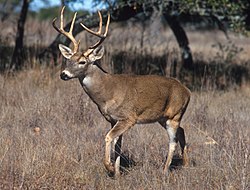
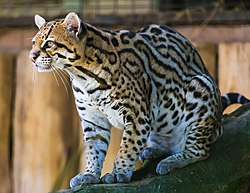
The flora of El Salvador includes some 800 species of trees and more than 400 varieties of orchids. The fauna of El Salvador, for its part, includes more than 1,000 species of butterflies, 800 species of marine fish, more than 100 species of mammals and more than 500 species of birds.[183][184]
- Fauna and flora of El Salvador
-

-

-
-

-

-

-

-

-

-

-

-

-

-

-
 Tiger butterfly
-
 Salome yellow
-

-

-

-

-

-

-

-

-
-

-

-

-

-

-

-

-

-

-

-

-

-

-

-

-

-


Economy


During the successive governments of the ARENA party, free-market initiatives and a model of fiscal management were implemented that included the privatization of the banking system, telecommunications, public pensions, electricity distribution and part of electricity generation, a reduction of tariffs, the elimination of price controls and improved enforcement of intellectual property rights.
GDP has been growing at a steady but modest pace since the signing of the peace accords in 1992, in an environment of macroeconomic stability. One problem El Salvador faces is economic inequality in the distribution of personal income. In 1999, the richest fifth of the population received 45% of the country's income, while the poorest fifth received only 5.6%.[185]
As of December 1999, net international reserves reached 1,800 million dollars. The Government of El Salvador undertook a monetary integration plan whereby, beginning in January 2001, the U.S. dollar became legal tender alongside the Salvadoran colón, which facilitated economic transactions with other countries. In this way, the government formally limited its ability to impose monetary policies on the market.[186]
Despite the existence of two legal currencies in the country, the colón stopped circulating; however, some stores still display prices to the public in both colones and dollars. In general, due to the strong effect of remittances, the population supported the change from the colón to the dollar. The change to the dollar also brought about a pattern of lower interest rates in El Salvador, helping many to obtain credit to buy a house or a car. The political left was very critical of the dollarization process, alleging that it favors the interests of companies in the financial sector.[187]
On September 7, 2021, El Salvador became the first country in the world to adopt Bitcoin as legal tender, together with the U.S. dollar. The law, promoted by President Bukele, aimed to reduce dependence on the dollar, promote financial inclusion and attract foreign investment. As part of this policy, the government launched the state digital wallet Chivo Wallet and bought large quantities of Bitcoin.[188]
The initial acquisitions and those made through mid-2022 were carried out at an average price of around 43,000–45,200 dollars per BTC.[189][190] Since the end of 2022, the Government has implemented a systematic strategy of buying 1 BTC daily (known as DCA), which has allowed it to accumulate more than 7,600 BTC by the end of April 2026. The weighted average of the early purchases is around 45,000 dollars. Later one-off operations, such as the acquisition of 1,090 BTC in November 2025 at an average price of about 92,125 dollars, have slightly raised the overall average cost, but most of the holdings were bought at significantly lower prices.[191][192]
As for macroeconomic indicators, El Salvador's GDP grew 3.5% in 2024, driven by private consumption, family remittances (which reached a record $8,400 million) and investment in tourism infrastructure. The fiscal deficit fell to 2.5% of GDP, while public debt remained at around 75% of GDP.[8]
At present, the economy is more oriented toward manufacturing and services rather than agriculture (coffee growing). Its main industries are food and beverages, petroleum products, tobacco, chemicals, textiles and furniture. As of 2025 there were fifteen free trade zones in El Salvador. The largest beneficiary has been the textile maquila industry, which provides 88,700 direct jobs and consists mainly of cutting and assembling garments for export to the United States. In recent years inflation has fallen to single-digit levels and total exports have grown substantially.[193]
El Salvador was the first country to sign and implement the Dominican Republic–Central America Free Trade Agreement (CAFTA), as well as free trade agreements with Mexico, Chile, the Dominican Republic and Panama, and it has increased its exports to those countries. El Salvador, Guatemala, Honduras and Nicaragua are also negotiating a free trade agreement with Canada. Likewise, negotiations have been concluded on a Free Trade Agreement with Colombia and another with Taiwan.
Fiscal policy has been the greatest challenge for the government of El Salvador. The 1992 peace accords committed the government to expenditures for transition programs and social services. Although international aid was abundant and generous, the government focused on improving the collection of its current revenues. A 10% value-added tax (IVA), implemented in September 1992, was raised to 13% in July 1995. The IVA is the largest source of revenue, reaching 52.3% of total tax revenues in 2004.
| Exports | Imports | ||
|---|---|---|---|
| Country | Percentage | Country | Percentage |
 USA |
66% | USA
|
43.4% |
| CARICOM | 26% | Guatemala | 8.2% |
 MEX |
1% | MEX
|
7.8% |
 ESP |
1% |  European Union |
7% |
| Others | 6% | Others | 33.6% |
Economic progress has led recognized international financial institutions, such as Moody's, to grant El Salvador an "investment grade" rating, which in Hispanic America is otherwise enjoyed only by Chile, Peru, Mexico, Panama and Colombia. At present, Salvadoran banking has expanded throughout Central America, becoming the largest banks in the region. Likewise, the largest regional airline, Avianca El Salvador, is 70% owned by Salvadoran businesspeople.[needs update] Salvadoran private investment is found throughout the region, especially in the services sector. Other examples are the presence throughout the Region of Agrisal and its brands: Holiday Inn, Crowne Plaza; and Grupo Roble with Metrocentro, Multiplaza and other projects that have reached the Caribbean and South America, such as Urbánica and Inversiones Bolívar.
Remittances from Salvadorans working in the United States sent to members of their families are an important source of foreign income and offset the substantial trade deficit of around $4,000,000,000. Remittances have increased steadily over the past decade and reached an all-time high of $3,780,000,000 in 2008—approximately 17.1% of gross domestic product (GDP).[194][195]
Being a country rich in folklore and traditions, artisanal production is widespread throughout the state and contributes greatly to the development of the national economy. Materials worked include wicker, cordage (jarcia), clay, palm, wood, tule, gourds (jícaras), leather and metals, among them gold and silver. Weaving, pottery, goldsmithing (filigree) and tinsmithing (farming implements, machetes) are widespread crafts, and they are a way of generating economic progress for many people, who devote themselves to selling handicrafts to domestic and foreign tourists and to exporting, mainly to the United States, Germany and the rest of the European Union.[196]
El Salvador, together with Mexico, all the Central American countries and Colombia, carries out the Puebla-Panama Plan, a regional integration effort that involves some investment in infrastructure and social development.
Energy balance
In El Salvador more than half of the energy is produced from renewable resources such as hydroelectric and geothermal power, with high expectations of growth due to projects to expand the geothermal plants and the construction of new hydroelectric dams; in addition, a natural gas plant is being developed with an investment of 900 million dollars. According to the National Energy Commission, 94.4 % of total injections during January 2021 came from hydroelectric plants (28.5 % – 124.43 GWh), geothermal plants (27.3 % – 119.07 GWh), biomass (24.4 % 106.43 GWh), solar photovoltaic (10.6 % – 46.44 GWh) and wind (3.6 % – 15.67 GWh).
As a result, El Salvador has become one of the leaders in renewable energy in Central America, in addition to being the first country in the world to ban metal mining (in 2017) for various environmental reasons.[197][198]
The following table shows El Salvador's total energy production as of 2021 and its percentages.[199]
| Forms of energy | 2021 (GWh) |
% |
|---|---|---|
| Hydroelectric | 124.43 | 28.5 |
| Geothermal | 119.07 | 27.3 |
| Biomass | 106.43 | 24.4 |
| Solar photovoltaic | 46.44 | 10.6 |
| Wind | 15.67 | 3.6 |
| Total | 412.04 | 94.4 |
Forestry
Due to the high population density and the early exploitation of coffee, El Salvador's forest resources have been reduced to a small percentage of the country's area (5.8%, equivalent to some 1,210 km²), and most of them are protected. As a result, most of the wood the country needs must be imported. Nevertheless, tree species very particular to the country are maintained, together with others found in almost all of Ibero-America. Balsam trees are very abundant in its forests. In fact, El Salvador is one of the main suppliers of balsam gum.
Tourism

Tourism is one of the country's greatest resources for economic development. El Salvador also has exceptional potential in cultural tourism, with more than 2,000 recognized archaeological sites showing traces of the Maya, Olmec, Nahua and Lenca cultures. Tourism has become one of the most important economic activities, ranking as the second most important source of foreign currency after family remittances. [200]
In 2019, 2.6 million foreign tourists visited El Salvador, generating annual revenue of $1,777 million, or 6.5% of GDP at the time. MITUR has a budget of 27 million dollars.[201] Tourism directly and indirectly supported 317,200 jobs, or 11.6% of total employment in El Salvador. The tourism sector is considered the fastest-growing sector of the Salvadoran economy.[202][203]
Tourism has established itself as one of the engines of the Salvadoran economy. In 2024, El Salvador received 3.9 million international visitors, 17% more than in 2023, surpassing pre-pandemic levels.[204] The country has gained popularity as a surfing destination, attracting tourists from around the world to beaches such as El Tunco, El Sunzal and Las Flores. Improvements in public security have also been a key factor in this growth.[205]
El Salvador offers several kinds of tourist attractions, but tourists mainly visit El Salvador for its beaches, where sports such as surfing stand out. The beaches of El Salvador are considered among the favorite destinations for surfing.[206][207] Other activities that attract tourists are culture and handicrafts, ecotourism, mountaineering and adventure tourism (such as rafting).[208][209]
To make tourism easier for foreigners and nationals, the Ministry of Tourism has proposed several routes:
Archaeological route: Joya de Cerén archaeological park (World Heritage Site), San Andrés archaeological park, Tazumal archaeological park, Casa Blanca archaeological park and Cihuatán archaeological park.
Handicrafts route: Ilobasco, Suchitoto, San Sebastián, La Palma.
Peace Route (Ruta de La Paz): A tourist destination rich in history, culture and nature. Its name alludes to the period of peace its towns have enjoyed since the civil war of the 1980s, and to the tranquility that characterizes the area. The route is located in the Department of Morazán and is made up of the districts of San Fernando, Perquín, Arambala, Meanguera, Torola, El Rosario, Jocoateca and Jocoaitique. Its most important sites of tourist interest are: the Museum of the Revolution, the former guerrilla camps, Río Sapo, Cerro El Pericón, Llano del Muerto, Bailadero del Diablo, the El Mozote Historic Site, the Monument to Reconciliation and Peace, and the Cueva de Las Pasiones.
Thousand Peaks Route (Ruta de las Mil Cumbres): Chaguantique Forest, Jiquilisco Bay, Tecapa Volcano and Laguna de Alegría, Berlín, Alegría.
Cool Route (Ruta Fresca): The name Ruta Fresca is given to the region formed by the districts of La Palma, San Ignacio and Citalá in the Department of Chalatenango. It is so called because of its climate, its beauty and its options for outdoor fun with family and friends, as well as places to stay overnight in hotels and hostels in the mountain area.
Sun and Beach Route (Ruta Sol y Playa): Western zone: Acajutla, Barra de Santiago, Metalío, Los Cóbanos, Los Almendros; Central zone: El Tunco, El Sunzal, El Zonte, Mizata and La Paz (these four beaches are part of the Surf City circuit), El Palmarcito, El Cocal, San Blas, San Diego, Costa del Sol and the Estero de Jaltepeque; and Eastern zone: El Espino and Punta Mango in Jucuarán, the various beaches of Jiquilisco Bay, El Cuco and Las Flores in Chirilagua (these two beaches are part of the Surf City circuit), El Esterón and El Icacal in Intipucá, Las Tunas, Playas Negras, El Tamarindo and El Jagüey in Conchagua, Playitas and Chiquirín in La Unión, Playa Playona on Zacatillo Island, El Maculí and the Gulf of Fonseca.
Flower Route (Ruta de Las Flores): Ahuachapán, Apaneca, Concepción de Ataco, Juayúa, Salcoatitán, San Antonio del Monte and Nahuizalco.
Volcano Route (Ruta de Los Volcanes): Cerro Verde, Izalco Volcano and Santa Ana Volcano.
- Tourist destinations of El Salvador
-
 Tazumal archaeological park
-
 Cihuatán archaeological park
-
 Church of Santa Lucía in the City of Suchitoto
-
 Lake Coatepeque
-
 Boardwalk at the Port of La Libertad
-
 El Rosario Parish in the Historic Center of San Salvador
-
 Parish church of the City of Apaneca
-
 Cerro El Pital in San Ignacio, Chalatenango.
-
 Moncagua Caves in San Miguel.
-
 Los Tercios Waterfall in Suchitoto.
-
 Colonial church in Metapán
-
El Sunzal Beach
-
 Salinitas Beach in Sonsonate
-
 Theater of Santa Ana
-
 Jiquilisco Bay
-
 Puerta del Diablo in Panchimalco, San Salvador
-
 Izalco Volcano in the Department of Sonsonate
-
 Historic center of San Salvador


Ecotourism and sustainable tourism: In recent years, El Salvador has promoted ecotourism as a sustainable alternative to traditional tourism. Areas such as El Imposible National Park, the Ruta de las Flores and Jiquilisco Bay offer experiences centered on nature, biodiversity and local culture. Community initiatives promote environmental conservation while generating income for rural populations. This approach has attracted travelers interested in activities such as hiking, birdwatching, ecological surfing and agritourism.[210]
Infrastructure

Energy infrastructure
Hydroelectricity
At present, hydroelectric power plants supply 36% of the electricity produced in El Salvador. The state-owned public company CEL (Comisión Ejecutiva Hidroeléctrica del Río Lempa) owns and operates 97% of this capacity.[211]
The four hydroelectric power plants in El Salvador are: 5 de Noviembre (81.4 MW), Guajoyo (15 MW), Cerrón Grande (135 MW) and 15 de Septiembre (156.3 MW), all of them on the Lempa River.[212]
In this sector, the projects currently under way are the following:
- Upgrade of the two units at the 15 de Septiembre plant with 24 MW of new capacity
- New El Chaparral hydroelectric plant with 66 MW.
- New El Cimarrón hydroelectric plant with 261 MW.
This expansion of hydroelectric capacity would add 351 MW to the system over the next 5 years, representing a 76 % increase in current capacity. In addition, if the binational projects El Tigre (on the Lempa River) and El Jobo and Piedra de Toro (on the Paz River) with Honduras and Guatemala were carried out, 488 MW of additional capacity would be added to the generation system.[213]
Geothermal energy
Geothermal energy provides more than 20% of the electricity the country consumes. El Salvador has an estimated geothermal potential of 644 megawatts (MW), one third of which is already being harnessed for generation. There are currently two geothermal facilities in operation in El Salvador: the Ahuachapán plant, at 95 MW, and the Berlín plant, at 104 MW. The majority state-owned electric company LaGeo, formerly called Gesal, operates the two plants. LaGeo is currently expanding the two existing geothermal plants and carrying out a feasibility study for a third plant, Cuyanausul. The three projects are expected to add 64 MW of installed electricity generation capacity by 2007.[214]
El Salvador is considered one of the top 10 producers of geothermal electricity worldwide.[215]
Solar energy
In 2015, AES Moncagua was inaugurated in San Miguel. It is a photovoltaic generation plant with a capacity of 2.5 MW, produced by more than 8,000 polycrystalline photovoltaic modules. In its statistical balance for December 2019, the National Energy Commission of El Salvador indicates that solar PV reaches a total of 9.2% of total electricity generation accumulated up to mid-December 2020. In terms of volume, solar ranks ahead of bunker fuel and wind, and very close to biomass. Nevertheless, in a comparison this record achieves a greater contrast.[216]
Solar photovoltaics (SPV) would have gone from 2.7% in 2018 to 4.2% in 2019 and to 9.2% in 2020. This means that photovoltaics would have grown by more than 120% compared with December 2019. Last year there were several inaugurations in the country, such as NEOEN's 140 MW plant plus storage and AES's Opico Power solar plant. According to IRENA sources, the country had 273 MWp installed in 2019; the latest installations would have added around 200 new MWp, pending final figures. at least 200 MWp of new photovoltaic systems.
Looking ahead to 2021, this figure of 9.2% is expected to be widely exceeded, since many of the new projects were inaugurated in the middle of the year and did not generate for the entire period. The completion of new projects is also awaited, such as the 8 MWp from BID Invest or the 6.4 MWp plant that the company MPC Capital intends to connect to the grid. El Salvador is establishing itself as one of the most attractive destinations in Central America for investment in photovoltaic plants.
Transportation infrastructure
Ports and airports

El Salvador has the following seaports:
The following international airports:
Located 40 kilometers from the capital. It was built in the second half of the 1970s and completed in 1979 by the Japanese construction company Hazumi Gumi, to replace its predecessor, Ilopango Airport.
The airport is the main connection center, or hub, for the airline Avianca El Salvador, and also serves other airlines flying to 31 destinations in Central America, North America, South America and Europe. It handled 2,453,217 passengers, making it the third busiest airport. It has 17 parking positions, a 3,200 m runway and a wide range of shopping options in the terminal.
The airport served as the main international airport. It is currently used for military aviation, charter flights and regional civil flights.
Road infrastructure
El Salvador's road infrastructure has historically been recognized as one of the most outstanding in Central America and Latin America. According to the Global Competitiveness Report of the World Economic Forum, in earlier editions the country ranked third in the region for road quality, behind only Chile and Panama, with a score of 4.7 out of 7. This rating placed it ahead of larger nations such as Mexico, Brazil and Colombia.
Although the World Economic Forum's Global Competitiveness Report ceased to be published in its traditional format after 2019, later assessments and regional analyses continue to place El Salvador among the countries with the best road infrastructure in Central America. The quality of its roads received a score of 4.2 out of 7.[217]
El Salvador has a total road network of approximately 9,012 kilometers, of which about 62.6% is paved. This is one of the highest paving rates in Central America in proportion to its territory. The Government has maintained a constant effort of conservation and modernization through the Road Conservation Fund (FOVIAL), working on more than 4,500 kilometers of paved roads and 2,800 kilometers of dirt roads during 2025.[218][219]
Major projects have also been carried out for widening, building overpasses and improving strategic corridors such as the Pan-American Highway, the Coastal Highway, the Troncal del Norte and access roads to tourist areas. For 2026, the Central American Bank for Economic Integration (CABEI) approved a loan of 155 million dollars for the second phase of the Road Infrastructure and Urban Mobility Program, which includes works in the San Salvador Metropolitan Area and other key corridors with the aim of reducing congestion and improving connectivity.[220]
Railway infrastructure
El Salvador's railway network enjoyed its golden age from the late 19th century to the mid-20th century.[221] The origin of the railway in El Salvador is tied to the coffee boom. The need to transport the "golden bean" from the highlands to the export ports made a faster alternative to ox-drawn carts necessary. The first step was taken on June 4, 1882, with the inauguration of the railway line linking the port of Acajutla with the City of Sonsonate. The first locomotives, brought from Europe, had to be disassembled so they could be unloaded at the port.[222]
Two large companies built and operated the networks independently:[222] the Western Railway (Ferrocarril de Occidente), driven by English capital, connected the port of Acajutla with Santa Ana and eventually with the capital, San Salvador; and the Eastern Railway (Ferrocarril de Oriente), run by the International Railways of Central America (IRCA), a subsidiary of the United Fruit Company, connected the east of the country. The joining of both systems at the Central Station of San Salvador (today the Railway Museum) in 1924 consolidated a network of more than 550 kilometers.[223]
The railway went into decline in the mid-20th century because of the construction of the Pan-American Highway, the rise of buses and trucks, and a lack of investment. In 1975, the government merged all operations under the state-owned FENADESAL (Ferrocarriles Nacionales de El Salvador). However, in October 2002 the train stopped completely. There were two later failed attempts:[221] in 2004–2005, when a provisional service was established between San Salvador and Soyapango, and in 2007–2013, when the commuter service between San Salvador and Apopa operated, suspended in 2013.
At present, no trains are running in El Salvador. The entire 555-kilometer network is out of use.[224] The former Central Station of San Salvador serves as the National Railway Museum. The government of El Salvador plans to revive the railway with the "Tren del Pacífico" (Pacific Train) project, approved by law on April 26, 2022, designed to connect the Port of Acajutla with the southern zone and, eventually, with the Guatemalan railway corridors and Mexico's Tren Maya, which would turn El Salvador into a strategic hub of Central American trade.[225]
Demographics
According to the 2024 population and housing census conducted by the Central Reserve Bank of El Salvador, the total population is 6,379,925 inhabitants.[2] The ethnic distribution remains similar to previous censuses, with a majority mestizo population (approximately 86%), followed by the white population (12%) and the Indigenous population (less than 1%). The officially recognized Indigenous peoples are the Pipil, Lenca and Cacaopera (or Kakawira).[2]
| Ethnicity | Percentage |
|---|---|
| Mestizos/Castizos | 83.0% |
| Whites (Caucasians) | 15.0% |
| Indigenous | 0.2% |
| Blacks | 0.13% |
| Others (Arabs, Armenians, Hindus) | 2.9% |
| Source: Ministry of Economy of El Salvador[226] CIA Factbook, 2007.[227] | |
The population numbers 6,029,976 according to the 2024 census. In the previous census, in 2007, the population was 83.0% mestizo; 15.0% white; and 0.2% Indigenous, though most are Hispanicized and do not belong to a specific ethnic group,[227] among them Kakawira (0.07%), Nahuat-Pipil (0.06%) and Lenca (0.04%); there is also a 0.13% Black population and 0.64% of other ethnic groups such as Armenians, Indians and Arabs, mostly from Palestine and Lebanon.[228]
It is the most densely populated country in continental America.[229] It is worth noting that El Salvador is currently the country in Latin America with the second-lowest rate of population growth in the region, above only Uruguay, with an annual change of 0.27%.[230]
As for the Black population, its presence in the territory dates back to the beginning of the Spanish presence, but there were attempts to conceal its existence during the nation-building process of the 19th and 20th centuries, which exalted mestizaje and its two origins: the white and Indigenous races.[231]
For instance, General Maximiliano Hernández Martínez went so far as to institute racial laws in the 1930s that prohibited certain ethnic groups from entering the country. Chapter III of the 1933 Migration Law, "Restrictions and limitations on immigration," stated in its Article 25: "Entry into the country is prohibited to foreigners falling under one or more of the following cases: those of the Black race; Malays and Gypsies, also known in the country by the name of 'Hungarians'." And Article 26 continued: "Likewise, the entry into the country of new immigrants originating from Arabia, Lebanon, Syria, Palestine or Turkey, generally known by the name of 'Turks', shall not be permitted."[232][233] However, the law specified that those of these races who were already established in the country retained their right to remain.
Also notable is the discrimination exercised in the economic sphere by General Maximiliano Hernández Martínez against these same groups of foreigners residing in the country. This kind of discrimination was legalized by Legislative Decree No. 49 of May 15, 1936, published in the Diario Oficial No. 111, Volume No. 120, of May 20, 1936, which prohibited the establishment of warehouses, shops, general stores, workshops, industrial factories and agricultural industries owned or run by persons belonging to the Arab, Palestinian, Turkish, Chinese, Lebanese, Syrian, Egyptian, Persian, Hindu and Armenian races, even if they were naturalized.[234] And by means of Legislative Decree No. 83 of June 25, 1936, published in the Diario Oficial No. 145, Volume No. 121, of July 3, 1936, members of these same immigrant groups were also prohibited from setting up drugstores, pharmacies, chemical or pharmaceutical laboratories and other commercial establishments.[235]
At the beginning of 2004, approximately 3.1 million Salvadorans were living outside El Salvador as immigrants in the United States, most of them undocumented/illegal; this is the destination to which they have traditionally gone to escape the precarious economic situation in which they live or to improve their living conditions. The second largest community of Salvadorans residing abroad is the community in Guatemala, numbering some 111,000; there are also large Salvadoran communities in Canada, Mexico, Italy, Sweden, Spain, Australia and Costa Rica. This situation worsened during the civil war of the 1980s and later because of adverse economic and social conditions.[236]
Main cities
| Main cities of El Salvador | |||||||||||
|---|---|---|---|---|---|---|---|---|---|---|---|
| No. | District | Municipality | Population | No. | District | Municipality | Population | ||||
| 1 | San Salvador | San Salvador Centro | 330,543 | 11 | San Juan Opico | La Libertad Centro | 97,210 | ||||
| 2 | Santa Ana | Santa Ana Centro | 250,760 | 12 | Tonacatepeque | San Salvador Este | 89,751 | ||||
| 3 | San Miguel | San Miguel Centro | 232,887 | 13 | Ilopango | San Salvador Este | 88,824 | ||||
| 4 | Soyapango | San Salvador Este | 230,255 | 14 | San Martín | San Salvador Este | 87,931 | ||||
| 5 | Mejicanos | San Salvador Centro | 136,641 | 15 | Izalco | Sonsonate Este | 77,529 | ||||
| 6 | Colón | La Libertad Oeste | 130,513 | 16 | Chalchuapa | Santa Ana Oeste | 74,025 | ||||
| 7 | Apopa | San Salvador Oeste | 129,083 | 17 | Sonsonate | Sonsonate Centro | 72,233 | ||||
| 8 | Ahuachapán | Ahuachapán Centro | 127,301 | 18 | Cuscatancingo | San Salvador Centro | 68,137 | ||||
| 9 | Santa Tecla | La Libertad Sur | 125,532 | 19 | Usulután | Usulután Este | 66,125 | ||||
| 10 | Delgado | San Salvador Centro | 106,367 | 20 | Ciudad Arce | La Libertad Oeste | 65,550 | ||||
| Source: Census by the Central Reserve Bank (2024)[237] | |||||||||||


Education
Literacy
According to 2025 data from the Ministry of Education, Science and Technology (MINEDUCYT), the literacy rate in El Salvador reaches 94.5% of the population over 15 years of age, although significant gaps persist in rural areas and among the Indigenous population.[238]
According to Government data, there are 28 municipalities in which illiteracy has been eradicated.[239] This means that at least 96% of their inhabitants can read and write.
Levels of the formal education system
Under Salvadoran law, formal education comprises the initial, preschool, basic, secondary and higher levels.[240] But the law also establishes that initial, preschool, basic, secondary and special education shall be free and compulsory.[241]
Initial education begins at the child's birth and lasts until just before the age of four.[242] Preschool education lasts three years and serves children from four to six years of age.[243]
Basic education is normally offered to students from seven to fifteen years of age and is compulsory, and also free when provided by the State. Six-year-old pupils may be admitted, provided that, under pedagogical criteria, they demonstrate appropriate maturity and aptitude according to the evaluation criteria and mechanisms established by the Ministry of Education. Basic education comprises nine grades of study divided into three cycles of three years each.[244]
Secondary education offers training in two modalities, one general and the other vocational. Secondary studies culminate in the degree of bachiller. The general bachillerato lasts two years, while the technical-vocational bachillerato lasts three years. The evening bachillerato lasts three and four years for the general and vocational modalities, respectively.[245]
To obtain the degree of Bachiller it is essential to have taken and passed the corresponding curriculum, including student social service;[246] in addition to taking a compulsory test established by the Ministry of Education to measure students' learning and aptitudes.[247] This exam, administered since 1997, was officially known as the Prueba de Aprendizaje y Aptitudes para Egresados de Educación Media (PAES); but in 2020 it was replaced by the "Avanzo" test. Public schools that provide secondary education are designated National Institutes, while private institutions are called colegios or liceos.
Higher Education shall be governed by a Special Law and has the following objectives: to train competent professionals with a strong vocation for service and solid moral principles; to promote research in all its forms; to provide social service to the community; and to cooperate in the conservation, dissemination and enrichment of the cultural legacy in its national and universal dimension.[248] It integrates three functions: teaching, scientific research and social outreach. Higher education is provided at technological institutes, specialized higher-level institutes and universities.[249]
Special education is a teaching-learning process offered, through graduated and specific methodologies, to persons with special educational needs.[250]
Higher education

The University of El Salvador (UES) was founded on February 16, 1841, by Legislative Decree of the Constituent Assembly, issued during the term of the President of the Republic, Juan Lindo, through the determined intervention of General Francisco Malespín. The UES was established with the aim of providing a center of higher education for the nation's youth, and thus preventing Salvadorans who had the means and the desire to pursue higher studies from deciding to emigrate to Guatemala or Nicaragua to complete their academic training at the University of San Carlos or the University of León, respectively, as they had done since the viceregal era. In its early years, the UES had a precarious existence because of the meager financial support it received from the State.
During the government of President Santiago González, two other public institutions of higher education were established: the Universities of the West and of the East, with their respective seats in the cities of Santa Ana and San Miguel.[251] The University of the West was created by Executive Decree of September 22, 1874, published in the Boletín Oficial[252] No. 14, Volume No. 3, of September 26, 1874.[253][254] For its part, the University of the East was created by Executive Decree of October 15, 1874, published in the Boletín Oficial[252] No. 18, Volume No. 3, of October 17, 1874.[255][256] However, these educational institutions were abolished by the government of President Rafael Zaldívar through the Organic and Regulatory Law of Public Instruction,[257] approved by Executive Decree of January 30, 1885, published in the Diario Oficial No. 26, Volume No. 18, of January 30, 1885.[258] With the disappearance of these two public universities, the UES once again held a monopoly on higher education in the country until 1965, when the Central American University José Simeón Cañas (UCA) was born as the first Salvadoran private university.
From the 1950s onward, the University of El Salvador became the main intellectual reference point of the Salvadoran left and was one of the most important centers of opposition to the country's authoritarian and militaristic governments, and it was because of this stance that many of its students and professors were victims of military repression.
The first private university to emerge was the Central American University José Simeón Cañas, whose most significant antecedent dates back to the early 1960s, when Monsignor Luis Chávez y González, Archbishop of San Salvador, expressed the idea of founding a Catholic university run by Jesuits, as there are many in different countries; but during the civil war the UCA was also considered leftist because of its interest in human rights during the war.
Also, the presidents of El Salvador who have pursued their higher studies in the country have graduated only from the UES and the UCA.
Culture
Folklore
When the Spanish arrived in Salvadoran territory, there were seven Indigenous peoples: the Maya Pokomam, the Maya Chorti, the Cacaopera (also called Ulúa or Kakawira), the Chorotega, the Lenca, the Xinca, and the Pipil.[15][259][260][261] Of these, the Pipil, Lenca and Cacaopera still inhabit the country. They are recognized as original peoples and strive to keep their customs and traditions from being forgotten by future generations, hoping that these will continue to be followed for a long time. The popular culture of El Salvador comprises ancestral traditions and customs that come from the pre-Hispanic cultures and from the viceregal era, which merged with foreign customs such as Spanish, Arab and African ones.[262][263]
The material expressions of Salvadoran folklore include elements such as handicrafts, with important production centers in Nahuizalco, La Palma and Ilobasco; the objects include various types of pottery, ceramics, clay, basketry, fired clay, toys, fireworks, etc.[264]
As regards dress, traditional garments are mostly worn at cultural events,[265] although they can occasionally be seen as part of everyday clothing in certain towns such as Izalco, Nahuizalco or Panchimalco.[266]
One of the best-known dances in the territory is the torito pinto. It is usually danced at cultural events in the country; the dance is performed in couples, each partner wearing their respective traditional costume, and it can have various choreographies depending on the event at which it is presented, and can represent various scenes.
In the field of social expressions, the cofradías and brotherhoods stand out. The localities where those with the greatest tradition are found include Cacaopera, Izalco,[267] Panchimalco,[268] Jayaque,[269] San Pedro Nonualco,[270] and Santo Domingo de Guzmán.[271] In popular commerce, on the other hand, there is the tiangue, and traditional toys survive such as the yo-yo, the trompo, the capirucho, chibolas (marbles), and games such as the palo ensebado, arranca cebolla, escondieron (hide-and-seek), the carrera de cintas a caballo, etc.[272][273]
In the popular culture concerning the spiritual and mental realm, the patron saint festivities that take place in every municipality are noteworthy. Among them stand out those of San Miguel, where a renowned carnival takes place, as well as those of San Salvador, with the fiestas agostinas, and Santa Ana, with the fiestas julias. Other expressions are the dances; a brief list includes El Torito Pinto, Los Historiantes, Los Chapetones, El Tigre y El Venado, and Los Emplumados.[274]
There is also a body of myths, among the most representative of which are La Siguanaba, El Cipitío, La Descarnada, La Carreta Chillona, Las Burletas, and El Cadejo, among others.[275]
-
 Handicrafts from La Palma
-
 Handicrafts from Ilobasco
-
 Handicrafts from La Palma
-
 Handicrafts from Ilobasco
-
 Holy Week procession in Izalco
-
 Traditional costumes at cultural events
-
 Pupusas from Olocuilta.
-
 Folkloric ballet with the traditional volcareña costume
-
 Dance of the Historiantes


Cuisine


Maize, which is likewise used by many peoples of the Americas, is the main ingredient of typical Salvadoran cooking. The dish par excellence is the pupusa, which has a national day celebrated every second Sunday of November.[276]
Other popular foods made from maize are: tortillas, very important in the daily diet of Salvadorans;[277] as well as tamales; varieties of atole such as atol de elote, piñuela, shuco or chilate; snacks such as riguas, tustacas and totopostes; and maize chicha as a beverage.[278][279]
In addition, there are maize festivals, also known as atoladas, which are held in the second half of each year in various towns of the country, usually in August. These feasts may be family affairs.[280]
Apart from maize, the bean is another ingredient widely used in Salvadoran cooking.[278]
Other traditional dishes are: gallo en chicha, hen soup, sopa de patas, garrobo consommé, bean soup with pork and masitas, caldereta (fish stew), cassava nuegados, egg fritters, yuca con chicharrón, squash in honey, torrejas in honey, and pan con pavo, among others.[278][281]
There is also a variety of artisanal sweets, and towns such as Santa Ana and San Vicente are important in their production. They are sold mainly at the country's patron saint festivities, and a brief list includes: coconut preserves, grated coconut, melcochas, chilacayote, dulce de leche, nance sweets, tamarind sweets, panela sweets, among many others.[282][283][284]
Another important traditional culinary offering, within pan dulce, includes semita, viejitas, salpores, pichardines, cheese quesadillas, torta de yema, marquesote, and so on.[285][286]
Traditional hot beverages are chocolate, coffee, leche poleada, and those already mentioned that are made from maize. Popular cold drinks, called frescos, include horchata, tamarind, barley, ensalada, arrayán, chan, and tiste, to name a few.
Literature


During the pro-independence period in the Province of San Salvador, oratory predominated, and in the first years of the republic a Neoclassical stage developed, whose initiators were Miguel Álvarez Castro, Enrique Hoyos and Ignacio Gómez Menéndez. By the middle of the 19th century there was a first Romantic generation with authors such as Juan José Cañas, Francisco Esteban Galindo and Antonia Galindo. The second Romantic current had among its exponents Francisco Gavidia, who was also one of the initiators of Modernismo in Central America;[287] as well as Román Mayorga Rivas and Vicente Acosta, among others.
The end of the century saw the birth of Alberto Masferrer, who stood out for his social thought,[288] which he set down in his journalistic, oratorical and essayistic work. Also prominent in that period were Arturo Ambrogi, a notable author of literary impressionism;[289] and José María Peralta Lagos, a well-known costumbrista. Poets of the period were Ramón de Nunfio, Alfonso Espino, Alberto Rivas Bonilla and Sarbelio Navarrete; and among the prose writers, Francisco Herrera Velado, Carlos Serpas, Miguel Ángel Espino and Alberto Guerra Trigueros, among others. Writers of the generation of 1910 and 1915 were Alfredo Espino, Vicente Rosales y Rosales, Raúl Contreras and Julio Enrique Ávila.[290]
From the 1920s onward another generation of Salvadoran authors appeared, among whom stand out Salvador Salazar Arrué (Salarrué), who is considered the best Salvadoran short-story writer;[291] Claudia Lars, one of the finest female voices of Hispanic American lyric poetry of the 20th century;[292] as well as Serafín Quiteño and Lilian Serpas. Other 20th-century authors are Quino Caso, Pedro Geoffroy Rivas, Hugo Lindo, Alice Lardé de Venturino, Ricardo Trigueros de León, Matilde Elena López, and the fabulist León Sigüenza.
There was likewise the group known as the «Committed Generation», which included Ítalo López Vallecillos, Waldo Chávez Velasco, Irma Lanzas, Álvaro Menen Desleal, José Roberto Cea, Eugenio Martínez Orantes and Tirso Canales, among others; and the Salvadoran University Literary Circle of Roque Dalton, Jorge Arias Gómez, Manlio Argueta and Roberto Armijo. After these generations there emerged poets such as David Escobar Galindo, and, coming from literary groups, Luis Melgar Brizuela, Julio Iraheta Santos and Jaime Suárez Quemain. Other contemporary writers are Horacio Castellanos Moya, Francisco Andrés Escobar, Miguel Huezo Mixco, Berne Ayalá, Jacinta Escudos, Carmen González Huguet, Ricardo Lindo, Rafael Menjívar Ochoa, Otoniel Guevara, Claudia Hernández and Jorge Galán, to name a few.
Arts


In the field of painting, the first known artist in El Salvador was Wenceslao Cisneros. Later came names such as Marcelino Carballo, a native of Zacatecoluca, and Pascasio González, who was also active in architecture. In the 20th century, artists with European influence were Carlos Alberto Imery, who trained generations of painters; Miguel Ortiz Villacorta, who also ran an academy; and Pedro Ángel Espinoza, of humble origins.[293]
Of costumbrista character, emerging in the first third of the 20th century, are Salarrué himself, Zélie Lardé and José Mejía Vides. A notable figure who founded a school in the country was the Spaniard Valero Lecha, trainer of renowned painters such as Julia Díaz, Raúl Elas Reyes and Noé Canjura. Opposed to the academicist current, and called Los independientes (The Independents), are Camilo Minero, Luis Ángel Salinas and Carlos Cañas. Also from this period is Rosa Mena Valenzuela, a representative of spiritualist expressionism in the country.[294] During the 1970s, a period of social unrest, several figures emerged, among whom may be mentioned Roberto Huezo, Armando Solís, Antonio García Ponce, Fernando Llort, Salvador Llort and César Menéndez, among others. Part of a prolific list of contemporary artists are Antonio Bonilla, Roberto Galicia, Giovanni Gil, Sonia Melara, Mayra Barraza and Walterio Iraheta.[293][295] From 2000 onward numerous artistic collectives began to appear, such as ADOBE (2000), ETERO (2002) and LA FABRI-K (2007), among others, made up of artists such as Antonio Romero, Mauricio Esquivel, Carmen Elena Trigueros, Danny Zavaleta, Natalia Domínguez and Dalia Chévez.
In the field of caricature, Toño Salazar stands out, and other artists of the genre are Rigo, Bollani and Ruz.
In the field of sculpture, the name of Valentín Estrada stands out; he is considered the first «national sculptor». In the 1970s the Spaniard Benjamín Saúl exerted influence in the country; other sculptors are Enrique Salaverría, Rubén Martínez, Leónidas Ostorga, Miguel Martino, Ana Beatriz Deleón, Negra Álvarez, Tití Escalante, Mauricio Álvarez, Verónica Vides and Guillermo Perdomo.[295][296]
Music
Traditional Salvadoran music—which in this case is performed in its dances—[274] is the product of Indigenous, European and African mestizaje.[297]
In the first years of the republican era, coplas, waltzes, romances and patriotic songs were performed in the country, and the first military bands also appeared.[298]
In the first half of the 20th century marimbas became popular, and some groups achieved international renown.[299] It was likewise the period in which notable composers stood out, with works ranging from the academic to the costumbrista, such as Felipe Soto, Ciriaco de Jesús Alas, David Granadino, Pancho Lara, Lito Barrientos, Luis Alonso Polío, Francisco Palaviccini and Benjamín Solís; the musicologist María de Baratta should also be mentioned.[297]
Other performers of academic music are Germán Cáceres, Alejandro Muñoz Ciudad Real, Esteban Servellón, and the Romanian-born maestro Ion Cubicec.[300]
El Salvador also has the Symphony Orchestra of El Salvador, as well as the Youth Symphony Orchestra, in addition to a National Choir.
With the arrival of new musical genres, dance orchestras appeared, and in the 1960s and 1970s youth groups began to proliferate, among which performers of the rock genre are worth noting;[301] two decades later heavy metal made its entry, and there are more than a hundred bands of this genre with recorded albums.[302]
On the other hand, Salvadoran cumbia has become established in the country.[303]
Media

El Salvador lists several uses of media throughout its history, which began in the viceregal era in the Kingdom of Guatemala of New Spain. After independence was granted in 1821, the first newspaper published in San Salvador was created, El Mercantil (1824–1826); it copied the title of a newspaper of New Spain from 1809, was influenced by the Mexican press through news and articles, and followed patterns common to the gazettes of the rest of Hispanic America, in the shadow of Spanish and French influences.[304] When the country was established as a sovereign and independent republic in 1841, the government created the Imprenta Nacional as an official gazette to report legislative, executive and judicial events in the government, although at first it constantly changed its name until 1875.[305] The press in El Salvador grew to reach 29 periodicals around the country during the 19th century, which has been maintained since then, being the first step in reaching readers.[306] The newspapers that continue to this day are the following: Diario Latino, one of the longest-running newspapers in the country, founded in 1890 by Miguel Pinto, although it was renamed Diario Co Latino in 1989;[307][308] La Prensa Gráfica, in 1915 by the Dutriz Brothers; El Diario de Hoy, in 1936 by Napoleón Viera Altamirano; Diario El Mundo, in 1967; and recently Diario El Salvador, in 2020.[309][307][310]
Moving into the 20th century, the country's first radio station appeared, called AQM (today Radio Nacional de El Salvador), originally on the AM frequency, by President Dr. Alfonso Quiñónez Molina in 1926. During the administration of General Maximilano Martínez, seeing that the media industry was beginning to evolve, call signs with the first two letters HU and YS were created under the designation of the International Telecommunication Union (ITU), along with the establishment of the Regulation for the Establishment and Operation of Broadcasting Stations in 1942, with the growth of radio.[311] Around the middle of that century, broadcasting added what was coming next, which was television: Don Eserski, Don Pinto, Don Alfaro, and the production of Rubén González inaugurated the first channel in El Salvador, called YSEB-TV (Channel 6), in 1956, which lasted ten years along with Channel 8. With the success of the television installation, more channels would be added over time, such as Channel 4 in 1958, Channel 10 in 1964 and its return in 1973, Channel 2 as the first private channel in 1965, and later Canal 12 de Televisión in 1984.[312][313]
The creation of the Salvadoran Association of Broadcasters (ASDER) in 1964 gave the media a secure place to expand the industry, and they continued to grow with the inauguration of the first FM radio stations at the end of the 1960s, the resurgence of Channel 6 in 1973 with the arrival of color television, and the formation of broadcasting companies such as Telecorporación Salvadoreña, Radio Corporación FM, and Grupo Megavisión, which founded the first channels on the UHF band, among others.[313] There are also regional channels in several cities of the country, and religious channels such as Televisión Católica Arquidiocesana, which began with Channel 57 in 2000, the return of Channel 8 with Agape TV in 2001, and ELIM TV in 2007.[312] Technology also evolved, with various establishments in the media, under the administration of ANTEL from 1962 to 1996, with SIGET as its successor. El Salvador currently has 67 radio concessions across the AM and FM bands, and 62 television concessions throughout its territory.[314][315]
In addition, El Salvador has fixed, public and mobile telephony, with companies dedicated to these services established in the country; this began in 1870 with the telegraph, public and fixed telephones in 1887, and much later mobile telephony in 1993, with great evolution.[316][317] The internet was also created on December 14, 1995, by the technician Rafael "Lito" Ibarra, with the establishment of the digital operator SVNet, opening the way to the great worldwide network and digital culture for the 21st century onward.[318] Currently these include Claro, Telefónica, Tigo, Digicel, etc. There is also coverage in cable, satellite and digital television services and Internet.[319]
Sports
Through a general sports law,[320] which entered into force in December 2007, regulation of sports policy in the country and of the bodies responsible for it has been established. This legislation «declares the organization, promotion and development of sport throughout the national territory to be of social interest and public utility» (Art. 3). The main body in charge of this task is the National Sports Institute (INDES), which had already been created in 1980. This law likewise regulates the various federations, which are the highest authority for the relevant discipline. All must be recognized by INDES. At present, 43 institutions of this type are listed.[321] The regulations also recognize the functions of the Olympic Committee of El Salvador.
The most popular sport in the country is football. The national team has qualified twice for the World Cup. Throughout its history, Jorge «Mágico» González has been considered the best player in this discipline. However, it is the beach soccer format that has achieved the greatest success in international tournaments, as it took fourth place at the 2011 FIFA Beach Soccer World Cup. The beaches of the coastline have also favored the practice of surfing, with El Tunco beach in Tamanique, in the Department of La Libertad, being the most important center of attraction at the international level.[322]
The country has also taken part in the Olympic Games since 1968.[323]
At the Pan American Games, its best performance was at the Rio de Janeiro 2007 games,[324] highlighted by the gold medal of racewalker Cristina Esmeralda López. Among other relevant achievements, archer Jorge Jiménez reached the top of the FITA world rankings in 2007.[325]
As for international competitions organized by El Salvador, notable are the Central American Games held in 1977 and 1994 and the Central American and Caribbean Games, organized in 1935, 2002 and 2023, with San Salvador as the official host of the games and the Estadio Nacional Jorge "El Mágico" González as the main venue. The respective federations have likewise organized events within their competence.
 El Salvador at the Olympics
 National Football Team
- National Beach Soccer Team
- Primera División of El Salvador
 El Salvador national basketball team


Religion

| Religion | Percentage |
|---|---|
| Protestantism | 38.1% |
| Catholicism | 38.9% |
| Irreligion | 19.7% |
| Other | 2.8% |
| Source: IUDOP SURVEY[326] | |
The Constitution of El Salvador guarantees the free exercise of all religions in Article 25. The same fundamental charter recognizes the legal personality of the Catholic Church, while the other churches may obtain recognition of their legal personality in accordance with the law (Art. 26).
Christianity represents the majority of the community of El Salvador, for reasons of cultural history dating from the viceregal era of the Spanish Empire. Historically, the country has had a marked Catholic majority for centuries, and it even had a concordat with the Holy See in Vatican City in 1968, which regularizes the diplomatic missions between two independent countries in order to preserve the country's seven dioceses with the Archdiocese of San Salvador.[327] However, according to various surveys this reality has been changing: in 1995, 16.8% of the population considered itself Evangelical Christian, while by 2008 the percentage had risen drastically to 34.4%; in contrast, the Catholic population is declining, going from 67.9% in 1995 to 50.4% according to a 2009 poll by the Central American University José Simeón Cañas (this survey differs in the number of Evangelical Christians, estimating them at 38.2% of the country's population; 2.5% belonged to another religion, while 8.9% stated they had no religion).[328][329]
The largest Protestant Christian groups in El Salvador are the churches of the Assemblies of God, Pentecostalism, Baptist churches, the Presbyterian Church, and the Anglican Church.
Other religions are also present in El Salvador, such as Jehovah's Witnesses, the Baháʼí Faith, Islam, Buddhism, Judaism,[330] groups related to Hinduism, Rosicrucianism, psychic-spiritualist movements of the New Age, and popular or syncretic religion of native and Christian traditions.[331]


Public holidays
| Date | Celebration | Note |
|---|---|---|
| January 1 | New Year's Day | |
| March or April | Holy Thursday | |
| Good Friday | ||
| Holy Saturday | ||
| Easter | ||
| May 1 | Labor Day | Also called International Workers' Day. |
| May 10 | Mother's Day | |
| June 17 | Father's Day | |
| August 6 | Day of San Salvador | The celebration refers to Jesus Christ, who likewise gives his name to the country and to the capital. |
| September 15 | Independence Day | Celebrates the 1821 Act of Independence of Central America. |
| November 2 | All Souls' Day | |
| December 24 | Christmas Eve | From noon onward. |
| December 25 | Christmas | |
| December 31 | New Year's Eve | From noon onward. |
Public holidays
| Date | Name | Statutory day off | Description |
|---|---|---|---|
| January 1 | New Year's Day | Yes | Celebration of the arrival of the new year. |
| January 16 | Victims of the armed conflict | No | Commemoration of the victims of the armed conflict. |
| March 8 | Women's Day | No | Recognition of Salvadoran women. |
| Between March and April | Holy Week | Yes | Religious commemoration of the Passion of Christ. |
| May 1 | Labor Day | Yes | Celebration of labor in El Salvador. |
| May 3 | Day of the Cross | No | Celebration of the cross as a form of thanksgiving. |
| May 7 | Soldier's Day | No | Recognition of the Salvadoran soldier. |
| May 10 | Mother's Day | Yes | Recognition of all Salvadoran mothers. |
| June 17 | Father's Day | Yes | Recognition of all Salvadoran fathers. |
| June 22 | Teachers' Day | No | Recognition of all Salvadoran educators. |
| July 20 | Salvadoran Engineer's Day | No | Recognition of all Salvadoran engineers and engineering students.[332] |
| July 31 | Journalist's Day | No | Day dedicated to Salvadoran journalism. |
| August 6 | Day of the Transfiguration of the Lord | Yes | Day dedicated to the Divine Savior of the World, patron of El Salvador. |
| September 15 | National Independence Day | Yes | Independence of Central America from the Kingdom of Spain. |
| October 1 | Children's Day | No | Festivity dedicated to all children. |
| October 11 | Day of the Girl | No | Festivity dedicated to all girls. |
| November 2 | All Souls' Day | Yes | Celebration of the departed. |
| November 5 | First Cry of Independence | No | Commemoration of the first cry of independence of Central America. |
| 2nd Sunday of November | National Pupusa Day | No | Tribute to the most popular traditional dish of El Salvador: pupusas. |
| December 24 | Christmas Eve | No | Eve of Christmas. |
| December 25 | Christmas | Yes | Celebration of the birth of Jesus of Nazareth. |
| December 31 | New Year's Eve | No | End of the year. |
See also
- Category:Populated places in El Salvador
- History of the Jews in El Salvador
- Nahuas
- Lordship of Cuzcatlán
- Lencas
- 1932 Salvadoran peasant uprising
- Nahua genocide in El Salvador
References
- ↑ "Constitución de la República de El Salvador (1983), art. 62" (PDF) (in español). Archived from the original (PDF) on June 6, 2024. Retrieved June 6, 2024.
{{cite web}}:|archive-date=/|archive-url=timestamp mismatch; February 24, 2024 suggested (help) - ↑ 2.0 2.1 2.2 2.3 2.4 "Presentación Nacional de Resultados Censo de Población y Vivienda El Salvador 2024 (2ª Entrega)" (PDF) (in español). 2025-01-30. Archived (PDF) from the original on 2025-02-22. Retrieved 2025-02-22.
- ↑ Alemán, Luis (February 2011). "Del pensamiento conservador al pensamiento científico" (PDF). El Universitario (in español). Época XIII (17). San Salvador: Editorial Universitaria UES: 4. OCLC 56959887. Archived from the original (PDF) on March 29, 2017. Retrieved March 31, 2017.
- ↑ "Prólogo del Rector, Ingeniero Mario Roberto Nieto Lobo" (PDF). Revista La Universidad (in español). Nueva Época (20): 5. January–March 2013. ISSN 0041-8242. OCLC 1026520694.
- ↑ Monterrey, Francisco J (1977). Historia de El Salvador: anotaciones cronológicas 1810-1842 (in español). Vol. I (Segunda ed.). San Salvador: Editorial Universitaria UES. p. 297. OCLC 252662611.
- ↑ See the Tratado de Paz y Amistad entre El Salvador y España and its legislative decree of ratification by El Salvador in the Archivo Digital del Diario Oficial de la Imprenta Nacional de El Salvador, 1866, Parte2.pdf Archived 2014-10-22 at the Wayback Machine
- ↑ 7.0 7.1 7.2 7.3 7.4 CIA. "El Salvador - Geografía - Libro Mundial de Hechos" (in español). Retrieved January 15, 2020.
- ↑ 8.0 8.1 8.2 8.3 8.4 "Report for Selected Countries and Subjects - October 2024". Retrieved April 30, 2026.
- ↑ "Índice de Gini - El Salvador". World Bank (in español). 2023. Retrieved October 19, 2025.
- ↑ United Nations Development Programme (UNDP), ed. (May 6, 2025). "Human Development Insights". Retrieved May 12, 2025.
- ↑ "El Salvador se convierte en el primer país del mundo en adoptar el bitcóin como moneda de curso legal". BBC Mundo (in español). June 9, 2021. Retrieved April 30, 2026.
- ↑ International Telecommunication Union (August 3, 2012). "Table of International Call Sign Series (Appendix 42 to the RR)". Archived from the original on May 2, 2012. Retrieved March 30, 2020.
- ↑ 13.0 13.1 13.2 CIA. "El Salvador - Geografía - Libro Mundial de Hechos" (in español). Retrieved February 11, 2017.
- ↑ "Declaración del personal técnico del FMI tras la visita a El Salvador". FMI (in español). January 25, 2022. Retrieved April 30, 2026.
- ↑ 15.0 15.1 15.2 15.3 Larde y Larín, Jorge (1983). El Salvador: descubrimiento, conquista y colonización (in español). Academia Salvadoreña de la Historia.
- ↑ 16.0 16.1 16.2 16.3 16.4 Carlos Pérez Pineda and Óscar Meléndez, El nombre oficial de la República de El Salvador, First edition, Dirección de Publicaciones e Impresos, San Salvador, El Salvador, 2015, p. 37.
- ↑ 17.0 17.1 17.2 17.3 Herrera Mena, Sajid Alfredo (2013). El ejercicio de gobernar: Del cabildo borbónico al ayuntamiento liberal. El Salvador colonial, 1750 - 1821 (in español). Universitat Jaume I. ISBN 978-84-15443-13-1.
- ↑ 18.0 18.1 Herrera Mena, Sajid Alfredo (2005). "La invención liberal de la identidad estatal salvadoreña, 1824-1839". ECA Estudios centroamericanos (in español) (Nº 684). Universidad Centroamericana "José Simeón Cañas". ISSN 0014-1445.
- ↑ Departamento de Relaciones Públicas. Casa Presidencial: El Salvador 1974-1975, pp. 12–13.
- ↑ "Constitución Política de la República de El Salvador de 1824 | Biblioteca Virtual Miguel de Cervantes". Miguel de Cervantes Virtual Library (in español). June 12, 1824. Retrieved March 2, 2016.
- ↑ Pedro Escalante Arce (2011). Entrevista en línea de La Prensa Gráfica (video, in Spanish). El Salvador: La Prensa Gráfica. Event occurs at 3:56. Retrieved April 26, 2011.
- ↑ Francisco J. Monterrey, Historia de El Salvador: Anotaciones cronológicas 1810-1842, Second edition, Editorial Universitaria, San Salvador, El Salvador, 1977, Volume I, p. 297.
- ↑ "Vocación integracionista de El Salvador" by Norman Quijano
- ↑ Memoria Centroamericana. Archived 2016-11-01 at the Wayback Machine Document detail: Alejandro Marure, «Efemérides de los hechos notables acaecidos en la República de Centroamérica. Desde el año de 1821 hasta el de 1842», Imprenta de la Paz, Guatemala, 1844, page 127. Archived 2021-02-24 at the Wayback Machine
- ↑ Archivo Digital del Diario Oficial de la Imprenta Nacional de El Salvador, 1915, 2T, Parte16.pdf Archived 2014-10-22 at the Wayback Machine
- ↑ Decreto legislativo declarando el nombre oficial de El Salvador
- ↑ Archivo Digital del Diario Oficial de la Imprenta Nacional de El Salvador, noviembre-1958, Parte6.pdf Archived 2014-10-22 at the Wayback Machine.
- ↑ Decreto legislativo reafirmando el nombre oficial de El Salvador
- ↑ El Diario de Hoy (September 10, 2004) Vocación integracionista de El Salvador.
- ↑ On February 18, 1841, a Constituent Assembly approved the first Constitution of El Salvador as a sovereign State independent of the Federal Republic of Central America, which contemplated the possibility of carrying out the reorganization of the defunct Central American Federation. However, in view of the insurmountable difficulty of achieving that objective, the Salvadoran parliament, acting in accordance with Art. 95 of the Constitution of El Salvador of 1841, issued the Legislative Decree of January 25, 1859, published in the Gaceta del Salvador [sic, for "Gaceta de El Salvador"], No. 88, Volume No. 7, of March 19, 1859, which reaffirmed the external sovereignty of El Salvador, establishing the State as an independent Republic. See in this regard the Archivo Digital del Diario Oficial de la Imprenta Nacional de El Salvador, 1859, Parte4.pdf Archived 2014-10-22 at the Wayback Machine
- ↑ Alfaro et al. 2002, p. 7
- ↑ Alfaro et al. 2002, p. 8
- ↑ 33.0 33.1 33.2 Alfaro et al. 2002, p. 11
- ↑ Alfaro et al. 2002, p. 12
- ↑ 35.0 35.1 Alfaro et al. 2002, p. 13
- ↑ Ichikawa, Akira; Shibata Shione; Murano Masakage (2009). "El preclásico tardío en Chalchuapa: Resultado de las investigaciones de la estructura 5 en el parque arqueológico Casa Blanca" (in español).
{{cite journal}}: Cite journal requires|journal=(help) - ↑ 37.0 37.1 Shibata, Shione; Herrera Rocío (2019). "¿Continuidad o abandono? - El centro ceremonial de Tazumal, El Salvador C.A. después de la erupción del Volcán Ilopango entre el Siglo V – VI d.C." (in español).
{{cite journal}}: Cite journal requires|journal=(help) - ↑ Alfaro et al. 2002, p. 15
- ↑ Alfaro et al. 2002, p. 16
- ↑ 40.0 40.1 40.2 Alfaro et al. 2002, pp. 17–18
- ↑ FUNDAR. "Parque arqueológico Cihuatán" (in español). Archived from the original on July 19, 2013. Retrieved March 2, 2012.
- ↑ MINED II 2009, p. 34
- ↑ CEPA. "El golfo de Fonseca" (in español). Archived from the original on November 1, 2012. Retrieved March 6, 2012.
- ↑ Academia Salvadoreña de Historia. "Los esclavos negros, presencia y resistencia" (in español). Retrieved March 6, 2012.
- ↑ Alfaro et al. 2002, pp. 20–21
- ↑ MINED 1994, p. 92 harvnb error: multiple targets (2×): CITEREFMINED1994 (help)
- ↑ FISDL. "Sonsonate" (in español). Archived from the original on May 22, 2013. Retrieved March 6, 2012.
- ↑ Alfaro et al. 2002, p. 26
- ↑ "Guía Técnica: Procesamiento del Añil en El Salvador (pp. 17-18)" (PDF) (in español). Retrieved March 14, 2012.
- ↑ Alfaro et al. 2002, p. 28
- ↑ Víctor René Marroquín. "Acontecimientos del 15 de septiembre de 1821 (pp. 25-33)" (PDF) (in español). Archived from the original (PDF) on November 13, 2012. Retrieved April 28, 2012.
- ↑ Haggerty 1990, p. 7.
- ↑ Rodríguez 2009, p. 6.
- ↑ Sajid Alfredo Herrera Mena. "Luchas de poder, prácticas políticas y lenguaje constitucional. San Salvador a fines de 1821" (PDF) (in español). Retrieved April 28, 2012.
- ↑ FISDL. "Ahuachapán" (in español). Archived from the original on July 19, 2014. Retrieved April 28, 2012.
- ↑ Sajid Alfredo Herrera. "La invención liberal de la identidad estatal salvadoreña, 1824-1839 (p. 11)" (PDF) (in español). Retrieved April 28, 2012.
- ↑ 57.0 57.1 MINED II 2009, pp. 150–166
- ↑ Geoturismo: El café antes del siglo XX, amanecer Archived 2011-07-16 at the Wayback Machine
- ↑ Procafé: Procafé rinde homenaje a Gerardo Barrios impulsor del cultivo del café
- ↑ Perez O. Historical Dictionary of El Salvador Rowman & Littlefield, 2016 p7. ISBN 0810880202
- ↑ 61.0 61.1 61.2 Magaña Granados, Álvaro (2000). El Salvador. La República I 1808-1923 (in español). Fomento cultural del Banco Agrícola.
- ↑ Ching E. Authoritarian El Salvador: Politics and the Origins of the Military Regimes University of Notre Dame Press, 2014 ISBN 0268076995
- ↑ Archivo Digital del Diario Oficial de la Imprenta Nacional de El Salvador, 1881, Parte6.pdf Archived 2014-10-22 at the Wayback Machine
- ↑ Ley de Extinción de Comunidades
- ↑ Archivo Digital del Diario Oficial de la Imprenta Nacional de El Salvador, 1882, Parte8.pdf Archived 2014-10-22 at the Wayback Machine
- ↑ Ley de Extinción de Ejidos
- ↑ "Copia archivada" (in español). Archived from the original on July 21, 2015. Retrieved July 18, 2015.
- ↑ La Prensa Gráfica, Historia de la abeja y La Constancia, retrieved March 20, 2007.
- ↑ Exordio, La República de El Salvador, retrieved March 1, 2007.
- ↑ The victims of "la Matanza", as it came to be known, numbered in the thousands. [...] Various authors give figures ranging from 7000 to more than 25,000. Historia de El Salvador, Volume II, pp. 133–134,
Convenio Cultural México-El Salvador, Ministerio de Educación, 1994 - ↑ 1932, «Cicatriz de la memoria» Archived 2007-03-01 at the Wayback Machine, video published on the website of the Museo de la Palabra y la Imagen (El Salvador). At minute 2:55 it is said that "some 10,000 people" died.
- ↑ «Feliciano Ama, líder de la insurrección indígena de 1932», article in the newspaper Nuevo Enfoque. It states: "According to various accounts, between 20,000 and 30,000 Salvadorans were killed". Retrieved April 11, 2007.
- ↑ "José Feliciano Ama, cacique y líder indígena (1932) - ContraPunto". https://www.contrapunto.com.sv/ (in español). 2023-07-03. Retrieved 2023-09-27.
{{cite web}}: External link in|website= - ↑ Press, Europa (2017-01-29). "Masacre de 1932, el mayor etnocidio de la historia contemporánea de El Salvador". www.notimerica.com (in español). Retrieved 2023-09-27.
- ↑ CISPES La sangre de 1932, retrieved May 4, 2007.
- ↑ ORANGE Oligarquía Cafetalera en Santa Tecla y Santa Ana, retrieved May 4, 2007.
- ↑ Selser, Gregorio Cronología Imperial Archived 2010-06-16 at the Wayback Machine, retrieved May 4, 2007.
- ↑ Ministerio de Educación (1994), Historia de El Salvador, Tomo II.
- ↑ "El Faro". El Corazón de San Salvador (in español). Retrieved May 24, 2022.
- ↑ Destinia Travel Agency, Historia de El Salvador, retrieved March 29, 2007.
- ↑ Monseñor Romero-Apunte biográfico, cervantesvirtual.com.
- ↑ Mata, Santiago (2015). Monseñor Óscar Romero. Pasión por la Iglesia (in español). Madrid: Ediciones Palabra. ISBN 978-84-9061-244-6.
- ↑ free-people.net Historia de El Salvador, retrieved March 30, 2007
- ↑ Report of the UN Truth Commission on El Salvador (Report). United Nations. 1993-04-01.
- ↑ "'Removing the Veil': El Salvador Apologizes for State Violence on 20th Anniversary of Peace Accords". NACLA. Retrieved 2016-03-02.
- ↑ "El Salvador's Funes apologizes for civil war abuses". Reuters. 2010-01-16. Retrieved 2016-03-02.
- ↑ Danner, Mark (1993). The Massacre at El Mozote. Vintage Books. pp. 9. ISBN 067975525X.
- ↑ El Salvador, In Depth: Negotiating a settlement to the conflict. Uppsala Conflict Data Program Conflict Encyclopedia. Uppsala, Sweden: Uppsala University. Archived from the original on 2013-10-19. Retrieved 2013-05-24.
While nothing of the aid delivered from the US in 1979 was earmarked for security purposes, the 1980 aid for security only summed US$6.2 million, close to two-thirds of the total aid in 1979.
- ↑ "The Philadelphia Inquirer Historical Archive (1860–1922)". philly.com (via nl.newsbank.com).
{{cite web}}: CS1 maint: url-status (link) - ↑ Stokes, Doug (2006-08-09). "Countering the Soviet Threat? An Analysis of the Justifications for US Military Assistance to El Salvador, 1979–92". Cold War History. 3 (3): 79–102. doi:10.1080/14682740312331391628. S2CID 154097583. Retrieved 2023-02-13.
- ↑ "Truth Commission: El Salvador". 1992-07-01. Retrieved 2018-04-07.
- ↑ "Incostitucionalidad 44-2013/145-2013" (PDF) (in español). Supreme Court of Justice of El Salvador. 2016-07-13. Retrieved 2023-09-03.
- ↑ COHA (2016-07-25). "El Salvador's 1993 Amnesty Law Overturned: Implications for Colombia".
- ↑ "Sismo de magnitud 7,4 sacude El Salvador" (in español). BBC Mundo. October 14, 2014. Retrieved November 14, 2014.
- ↑ "Historia - Historia de las maras, las pandillas salvadoreñas enfrentadas a Nayib Bukele". France 24 (in español). 2022-04-06. Retrieved 2025-06-03.
- ↑ Martínez-Reyes, Alberto; Navarro-Pérez, J. Javier (2022-08-01). "Idiosincrasia de las pandillas en El Salvador y su impacto en la vida pública". Oñati Socio-Legal Series (in español). 12 (4): 709–736. doi:10.35295/osls.iisl/0000-0000-0000-1261. ISSN 2079-5971. Retrieved 2025-06-03.
- ↑ "World Bank Open Data". World Bank Open Data. Retrieved 2025-06-03.
- ↑ "Wayback Machine" (PDF). uca.edu.sv (in español). Archived from the original (PDF) on 2024-09-18. Retrieved 2025-06-03.
{{cite web}}: Cite uses generic title (help) - ↑ "Elecciones en El Salvador: Nayib Bukele gana los comicios presidenciales según resultados parciales y rompe con 30 años de bipartidismo en el país". BBC Mundo (in español). February 4, 2019. Retrieved March 13, 2019.
- ↑ "Nayib Bukele alcanza contundente respaldo en legislativas". DW Actualidad (in español). Berlin: Deutsche Welle. March 2, 2021. Retrieved May 15, 2021.
- ↑ "El Salvador: la nueva Asamblea, controlada por el oficialismo, destituye a los magistrados de la Sala de lo Constitucional". BBC Mundo (in español). May 2, 2021. Retrieved April 30, 2026.
- ↑ "Tribunal de El Salvador habilita reelección inmediata de Bukele". El Espectador (in español). September 4, 2021. Retrieved April 30, 2026.
- ↑ "Qué es el "régimen de excepción" que aprobó el Congreso de El Salvador a pedido del presidente Bukele para enfrentar a las pandillas". BBC Mundo (in español). March 27, 2022. Retrieved April 30, 2026.
- ↑ "Gobierno reporta más de 82,000 detenidos en el marco del régimen de excepción". La Prensa Gráfica (in español). May 15, 2025. Retrieved April 30, 2026.
- ↑ "El Salvador, uno de los países más seguros de América Latina con tasa de 1,9 homicidios por cada 100.000 habitantes". Infobae (in español). January 3, 2025. Retrieved April 30, 2026.
- ↑ "Nayib Bukele gana la reelección en El Salvador con más del 80% de los votos". BBC Mundo (in español). February 5, 2024. Retrieved April 30, 2026.
- ↑ "Nayib Bukele toma posesión de su segundo mandato como presidente de El Salvador". CNN Español (in español). June 1, 2024. Retrieved April 30, 2026.
- ↑ Lima, Lioman (March 1, 2021). "Nayib Bukele: qué supone que el presidente de El Salvador tenga "poder absoluto" con el control de la Asamblea Legislativa". BBC News Mundo (in español). London: British Broadcasting Corporation. Retrieved May 15, 2021.
- ↑ "Nayib Bukele alcanza contundente respaldo en legislativas". DW Actualidad (in español). Berlin: Deutsche Welle. March 2, 2021. Retrieved May 15, 2021.
- ↑ "Toma posesión la nueva Asamblea Legislativa de El Salvador, de mayoría oficialista". www.aa.com.tr (in español). Retrieved 2025-10-08.
- ↑ "GOLPE DE ESTADO: Asamblea Legislativa vota por destituir a magistrados de la Sala de lo Constitucional". Histórico (in español). 2021-05-01. Retrieved 2025-10-08.
- ↑ CA, Archivo (2025-08-01). "Asamblea Legislativa de El Salvador aprueba reforma constitucional para retiro del Parlacen". Canal Antigua (in español). Retrieved 2025-10-08.
- ↑ Electoral, Transparencia (2023-06-12). "El Salvador reduce la Asamblea Legislativa". Transparencia Electoral (in español). Retrieved 2025-10-08.
- ↑ "El Salvador cierra 2024 con 114 homicidios; Bukele dice que es el país más seguro del hemisferio". Voz de América (in español). 2025-01-02. Retrieved 2025-10-08.
- ↑ "Constitución de la República de El Salvador (1983), art. 85" (PDF) (in español). Archived from the original (PDF) on June 6, 2024. Retrieved June 6, 2024.
{{cite web}}:|archive-date=/|archive-url=timestamp mismatch; February 24, 2024 suggested (help) - ↑ El Diario de Hoy. "Los gobernadores mediarán entre Ejecutivo y las alcaldías" (in español). Retrieved January 25, 2012.
- ↑ "Constitución de la República de El Salvador (1983), art. 203" (PDF) (in español). Archived from the original (PDF) on June 6, 2024. Retrieved June 6, 2024.
{{cite web}}:|archive-date=/|archive-url=timestamp mismatch; February 24, 2024 suggested (help) - ↑ "Constitución de la República de El Salvador (1983), art. 86" (PDF) (in español). Archived from the original (PDF) on June 6, 2024. Retrieved March 3, 2013.
{{cite web}}:|archive-date=/|archive-url=timestamp mismatch; February 24, 2024 suggested (help) - ↑ "Constitución de la República de El Salvador (1983), arts. 121, y 123-124" (PDF) (in español). Archived from the original (PDF) on June 6, 2024. Retrieved June 6, 2024.
{{cite web}}:|archive-date=/|archive-url=timestamp mismatch; February 24, 2024 suggested (help) - ↑ "Reglamento interior de la Asamblea Legislativa, art. 54" (in español). Archived from the original on May 22, 2012. Retrieved January 25, 2012.
- ↑ "Constitución de la República de El Salvador (1983), arts. 150, 154, 157 y 159" (PDF) (in español). Archived from the original (PDF) on June 6, 2024. Retrieved June 6, 2024.
{{cite web}}:|archive-date=/|archive-url=timestamp mismatch; February 24, 2024 suggested (help) - ↑ "Constitución de la República de El Salvador (1983), art. 172" (PDF) (in español). Archived from the original (PDF) on June 6, 2024. Retrieved June 6, 2024.
{{cite web}}:|archive-date=/|archive-url=timestamp mismatch; February 24, 2024 suggested (help) - ↑ Consejo Nacional de la Judicatura. "Quienes somos" (in español). Retrieved January 25, 2012.
- ↑ "Código Electoral, art. 79" (in español). Retrieved January 25, 2012.
- ↑ "Constitución de la República de El Salvador (1983), art. 195" (PDF) (in español). Archived from the original (PDF) on June 6, 2024. Retrieved June 6, 2024.
{{cite web}}:|archive-date=/|archive-url=timestamp mismatch; February 24, 2024 suggested (help) - ↑ Corte de Cuentas de la República. "Ámbito de control" (in español). Archived from the original on October 27, 2012. Retrieved January 25, 2012.
- ↑ CONSTITUCIÓN DE LA REPÚBLICA DE EL SALVADOR, art. 203.
- ↑ Asamblea Legislativa de El Salvador (2023-06-14). "Decreto Legislativo 762, publicado en el D.O. 110 T., 439, del 14/06/2023" (PDF). Asamblea Legislativa de El Salvador (in español).
- ↑ Magaña, Yolanda (2024). "Distrito de San Salvador es la capital de la República según reforma a Ley de reestructuración municipal". Diario El Mundo (in español).
- ↑ 130.0 130.1 130.2 130.3 130.4 130.5 130.6 130.7 Instituto Geográfico Nacional 1986, p. 492–509
- ↑ La Prensa Gráfica. "Ubicación de la República de El Salvador en el mundo" (in español). Archived from the original on August 5, 2023. Retrieved August 5, 2023.
- ↑ CIA - The World Factbook. "El Salvador". Archived from the original on December 27, 2018. Retrieved January 27, 2012.
- ↑ Landaverde Ortiz, Melvin Camilo. "Efectos jurídico-políticos del fallo de la Corte Internacional de Justicia, de La Haya, para El Salvador" (in español). Retrieved January 27, 2012.
- ↑ SICA. "Finaliza Demarcación de fronteras de El Salvador y Honduras. Comunicado de Prensa CP-029/06" (in español). Retrieved January 27, 2012.
- ↑ "Copia archivada" (in español). Archived from the original on February 19, 2014. Retrieved June 22, 2012.
- ↑ "Copia archivada" (in español). Archived from the original on January 25, 2013. Retrieved July 9, 2013.
- ↑ SNET. "La Zona Costero-Marina de El Salvador" (in español). Retrieved January 29, 2012.
- ↑ Geoturismo Bosques de Café, El Salvador. "Sierra Apaneca-Ilamatepec" (in español). Archived from the original on November 1, 2012. Retrieved January 29, 2012.
- ↑ "Departamento de La Libertad" (in español). Retrieved January 29, 2012.
- ↑ "Plan de desarrollo turístico del circuito de la bahía de Jiquilisco y la sierra Tecapa-Chinameca" (in español). Retrieved January 29, 2012.
- ↑ SNET. "Geomorfología y relieve" (PDF) (in español). Archived from the original (PDF) on January 6, 2004. Retrieved January 31, 2012.
- ↑ CSJ. "Ley de áreas naturales protegidas" (in español). Retrieved February 4, 2012.
- ↑ MARN. "Áreas Protegidas" (in español). Retrieved January 27, 2012.
- ↑ "Áreas naturales protegidas en El Salvador". Noticias de El Salvador - La Prensa Gráfica | Informate con la verdad (in español). Retrieved 2021-07-10.
- ↑ ESAmundo. "Parque del Bicentenario" (in español). Retrieved February 12, 2012.
- ↑ MARN. "Información general de los sitios RAMSAR de El Salvador" (in español). Retrieved January 29, 2012.
- ↑ PNUMA 2006, p. 88
- ↑ 148.0 148.1 PNUMA 2006, p. 47
- ↑ 149.0 149.1 PNUMA 2006, p. 48
- ↑ 150.0 150.1 150.2 150.3 150.4 Ministerio de Medio Ambiente y Recursos Naturales, ed. (2017). Plan nacional de gestión integrada del recurso hídrico de El Salvador, con énfasis en zonas prioritarias (in español). San Salvador, El Salvador. ISBN 978-99923-897-1-3.
{{cite book}}: CS1 maint: location missing publisher (link) - ↑ Montoya, Ainhoa (2024). "Troubling environmental governance: citizen legal experiments with transboundary commons". Oxford Development Studies. 52 (4): 396–412. doi:10.1080/13600818.2024.2395008. Retrieved 2025-08-25.
- ↑ 152.0 152.1 PNUMA 2006, p. 50
- ↑ 153.0 153.1 153.2 153.3 153.4 SNET (2007). "Geología de El Salvador" (in español).
{{cite journal}}: Cite journal requires|journal=(help) - ↑ 154.0 154.1 154.2 154.3 Hradecký, Petr (2005). "Estudio geológico de los peligros naturales área de Metapán" (in español). Servicio Geológico Checo y Servicio Nacional de Estudios Territoriales de El Salvador.
{{cite journal}}: Cite journal requires|journal=(help) - ↑ 155.0 155.1 155.2 Cisneros, Juan Carlos (2011). "Los Fósiles del Tomayate" (PDF) (in español).
{{cite journal}}: Cite journal requires|journal=(help) - ↑ SNET (2007). "Geología de El Salvador" (in español).
{{cite journal}}: Cite journal requires|journal=(help) - ↑ 157.0 157.1 Alonso-Henar, Jorge (2016). "Evolución tectónica y estructural de la zona de Falla de El Salvador: aplicaciones a la amenaza sísmica" (in español). Universidad Complutense de Madrid.
{{cite journal}}: Cite journal requires|journal=(help) - ↑ 158.0 158.1 Denyer, Percy (2012). "Geología y geotectónica de América Central y el Caribe" (in español). Escuela Centroamericana de Geología, Universidad de Costa Rica.
{{cite journal}}: Cite journal requires|journal=(help) - ↑ Martínez-Díaz, José J.; Álvarez-Gómez, José A.; et al. (2020). "Active faults of El Salvador". Journal of South American Earth Sciences. Volumen 105 (published 2021). doi:10.1016/j.jsames.2020.103038.
{{cite journal}}:|volume=has extra text (help); Explicit use of et al. in:|first2=(help) - ↑ 160.0 160.1 160.2 CEL (1984). Léxico estratigráfico de El Salvador (in español).
- ↑ 161.0 161.1 Čech, Stanislav; Rapprich, Vladislav (2005). "Mesozoic stratigraphy of NW of El Salvador (western margin of the Chortis block)". Czech Republic. Development Cooperation.
{{cite journal}}: Cite journal requires|journal=(help) - ↑ Jaroslav, Lexa; Šebesta, Jiří; Chavez, José Alexander; Hernández, Walter; Pécskay, Zoltán (2011). "Geology and volcanic evolution in the southern part of the San Salvador Metropolitan Area". Journal of Geosciences, 56: 105–140. doi:10.3190/jgeosci.088. ISSN 1802-6222.
- ↑ 163.0 163.1 Cisneros, Juan Carlos (2005). "New pleistocene vertebrate fauna from El Salvador". Revista Brasileira de Paleontologia 8(3): 239–255.
- ↑ Orantes, Diana (2018). "Encuentran fósiles de un arrecife de hace 120 millones de años en Metapán" (in español). El Diario de Hoy.
{{cite journal}}: Cite journal requires|journal=(help) - ↑ Aguilar, Daniel H.; Laurito, César A. (2011). "Nuevo registro de Gomphotherium hondurensis (Frick, 1933) (Proboscidea, Gomphoteriidae) para el Mioceno superior de El Salvador, América Central". Revista Geológica de América Central (45) (in español).
- ↑ Soibelzon, Leopoldo.H.; Romero, M.R.; Huziel Aguilar, D.; Tartarini, VB. (2008). "A new finding in the Blancan of the El Salvador indicates the probable dating of the Tremarctinae's (Ursidae, Carnivora) entrance to South America". Neues Jahrbuch für Geologie und Paläontologie Abh 250 (1): 1–8.
- ↑ 167.0 167.1 SNET. "Volcanes activos" (in español). Retrieved February 2, 2012.
- ↑ "Expertos internacionales y nacionales comparten conocimientos geocientíficos en recorrido por volcanes de El Salvador". Ministerio de Medio Ambiente y Recursos Naturales (in español). 2024-02-26. Retrieved 2024-06-10.
- ↑ Ministerio de Medio Ambiente y Recursos Naturales, ed. (2023). "Volcanes de El Salvador" (in español).
- ↑ 170.0 170.1 SNET. "Volcanes activos de El Salvador" (in español). Archived from the original on August 2, 2014. Retrieved February 2, 2012.
- ↑ SNET. "Cronología de sismos destructivos en El Salvador" (in español). Retrieved February 4, 2012.
- ↑ Fusades 2007, pp. 106–108
- ↑ 173.0 173.1 173.2 Centella, A., Castillo, L. y Aguilar, A. (1998) Escenarios climáticos de referencia para la República de El Salvador: Primera comunicación nacional de cambio climático de El Salvador.
- ↑ SNET, El Clima en El Salvador, accessed March 29, 2007.
- ↑ "Aumentan a 184 los muertos por el paso del huracán Ida en El Salvador", article of November 8, 2009, in the newspaper El Mundo (Madrid). Accessed November 12, 2009.
- ↑ Informe de Agatha, SNET
- ↑ Germanwatch (ed.). "Global Climate Risk Index 2021" (PDF). Retrieved April 30, 2026.
- ↑ "Tercera Comunicación Nacional de Cambio Climático". Ministerio de Medio Ambiente y Recursos Naturales (MARN) (in español). Retrieved April 30, 2026.
- ↑ climatetemp.info. "San Salvador, El Salvador Climate Information". Archived from the original on April 23, 2012. Retrieved April 4, 2012.
- ↑ Calderón, Beatriz. "Estudio define cuánto bosque hay en El Salvador y los seis tipos existentes". LPG (in español). La prensa grafica. Retrieved September 17, 2021.
- ↑ Hernandez, Evelia (2018). "¿Sabes cuál es el departamento de El Salvador con más bosques?". elsalvador.com (in español). El Diario de Hoy. Retrieved September 17, 2021.
- ↑ "Áreas naturales protegidas". MARN.gob.sv (in español). Ministerio de Medio Ambiente de El Salvador. Retrieved September 17, 2021.
- ↑ "Diversidad Biológica en El Salvador" (PDF). PNUD (in español). MARN. Retrieved September 17, 2021.
- ↑ "PNEI – Flora y Fauna". PNEI (in español). Salvanatura. Retrieved September 17, 2021.
- ↑ Ávalos Salazar, Yesenia Guadalupe (January 2012). "Balance a diez años de entrada en vigencia del Tratado de Libre Comercio entre El Salvador y México" (PDF). Universidad de El Salvador (in español): 62. Retrieved July 19, 2013.
- ↑ AFP, El Salvador cayó en la trampa del dólar, accessed March 30, 2007.
- ↑ La ley de Integración Monetaria Diario Co-Latino. Accessed March 30, 2007.
- ↑ "Bitcoin en El Salvador: cómo funciona la Chivo Wallet y qué se puede comprar con la criptomoneda". BBC Mundo (in español). September 7, 2021. Retrieved April 30, 2026.
- ↑ "How Much Bitcoin Does El Salvador Have?". Bitbo (in español). Retrieved 2026-04-30.
- ↑ "How El Salvador Bitcoin Investment Strategy Changed in 2026". Retrieved 2026-04-30.
- ↑ "Tenencias de El Salvador Bitcoin". CoinGecko (in español). Retrieved 2026-04-30.
- ↑ "El Salvador supera los 7,600 BTC con compras graduales". elsalvador.com (in español). 2026-04-08. Retrieved 2026-04-30.
- ↑ Observatorio de la economía latinoamericana, Economía de El Salvador, accessed March 30, 2007
- ↑ "El Salvador recibió $3.3 millones en remesas", article in the newspaper La Prensa. Accessed March 30, 2007.
- ↑ «Atribuyen récord de remesas a la creciente emigración de salvadoreños», 2007 article published on the Terra Finanzas website. Accessed March 30, 2007.
- ↑ Hernández Campos, Patricia Concepción; Rolando Salvador Staben Solís; Carlos Alfredo Vásquez Martínez (November 2004). "Diseño de un programa de cashing OPEracional que mejore la administración de las ventas de los productores artesanales agremiados en acooprac de rl ubicados en la zona norte de El Salvador" (PDF) (in español). Archived from the original (PDF) on February 9, 2015. Retrieved July 19, 2013.
{{cite journal}}: Cite journal requires|journal=(help) - ↑ "El Salvador, primer país del mundo en prohibir la minería" (in español). La Vanguardia. March 30, 2017. Retrieved October 19, 2021.
- ↑ Singh, Nanda. "Las energías renovables crecen mientras las tarifas eléctricas disminuyen en El Salvador". Energia Estrategica (in español). Retrieved October 19, 2021.
- ↑ Generación anual 2013.[dead link] Dirección de Planificación y Seguimiento. Consejo Nacional de Energía de El Salvador.
- ↑ http://www.revistasumma.com/cuales-son-los-destinos-turisticos-favoritos-en-centroamerica/
- ↑ "El Salvador recibió 2.6 millones de visitantes por turismo en 2019" (in español). El Economista. Retrieved September 19, 2021.
- ↑ "El Salvador: sector turístico crece de forma acelerada, pero persisten retos" (in español). El economista. Retrieved September 19, 2021.
- ↑ "Turistas que visitaron El Salvador dejaron $1,761 millones en divisas en 2019" (in español). El Diaro de Hoy. Retrieved September 19, 2021.
- ↑ "El Salvador consolida su crecimiento turístico con 3.9 millones de visitantes internacionales en 2024". Ministerio de Turismo de El Salvador (MITUR) (in español). January 10, 2025. Retrieved April 30, 2026.
- ↑ "El Salvador reporta récord de turistas en 2024 gracias a la seguridad". Infobae (in español). February 15, 2025. Retrieved April 30, 2026.
- ↑ "Playa El Tunco en El Salvador entre las 50 mejores del mundo" (in español). El Pais. Retrieved September 19, 2021.
- ↑ "Las 5 mejores playas de El Salvador para los amantes del mar y del surf" (in español). Infobae. Retrieved September 19, 2021.
- ↑ "El Salvador: rafting para los amantes de la velocidad" (in español). El Economista.
- ↑ "Ecoturismo y aprendizaje, juntos en un campamento" (in español). El Diaro de Hoy. Retrieved September 19, 2021.
- ↑ micasasv (2025-06-12). "Descubre El Salvador Verde: Ecoturismo y Turismo Sostenible". Tu directorio de viviendas y servicios en El Salvador (in español). Retrieved 2025-06-12.
- ↑ CEPAL 2007
- ↑ SIGET 2007
- ↑ Gobierno de El Salvador 2007
- ↑ Energy Information Administration
- ↑ Pineda, Jonathan (March 29, 2021). "La geotermia, un recurso con larga vida en El Salvador". diarioelsalvador.com (in español). Diario El Salvador. Retrieved September 16, 2021.
- ↑ http://www.aeselsalvador.com/2009/NuestraEmpresa/AESMoncagua/tabid/838/language/en-US/Default.aspx [dead link]
- ↑ "Calidad de las carreteras por país". TheGlobalEconomy.com (in español). Retrieved 2026-04-30.
- ↑ "El 62,6 % de la red vial de El Salvador está pavimentada". Diario El Mundo (in español). 2025-11-01. Retrieved 2026-04-30.
- ↑ "El Salvador destinó más de $100 millones a infraestructura vial en 2025". Infobae (in español). 2026-01-16. Retrieved 2026-04-30.
- ↑ "BCIE aprueba $155 millones para infraestructura vial y movilidad urbana en El Salvador". elsalvador.com (in español). Retrieved 2026-04-30.
- ↑ 221.0 221.1 "Historia del Ferrocarril en El Salvador" (in español). FENADESAL. Retrieved April 30, 2026.
- ↑ 222.0 222.1 "Ferrocarril de El Salvador" (in español). Ferropedia. Retrieved April 30, 2026.
- ↑ "Museo Nacional del Ferrocarril" (in español). Ministerio de Cultura de El Salvador. Retrieved April 30, 2026.
- ↑ "El abandono del ferrocarril salvadoreño" (in español). El Diario de Hoy. March 15, 2025. Retrieved April 30, 2026.
- ↑ "Proyecto Tren del Pacífico" (in español). Presidencia de El Salvador. Retrieved April 30, 2026.
- ↑ Resultados Vi Censo de Población V de Vivienda 2007[dead link], censos.gob.sv
- ↑ 227.0 227.1 El Salvador Archived 2018-12-27 at the Wayback Machine, CIA Factbook. Accessed July 29, 2020.
- ↑ DYGESTIC: Censo de Población y Vivienda 2007 (Publicaciones). Tomo I: Características Generales de Población, p. XLVIII Archived 2012-01-14 at the Wayback Machine
- ↑ Dirección General de Estadísticas y Censos de El Salvador, Proyecciones de población, accessed March 30, 2007.
- ↑ Comparación de países por tasa de crecimiento demográfico [1], accessed June 10, 2016.
- ↑ Bicentenario: «Afrodescendientes y pueblos originarios en El Salvador[dead link]» Lecture by Dr. Ramón Rivas, National Director of Cultural Heritage, Secretariat of Culture of the Presidency, El Salvador
- ↑ Elena Salamanca. «NO a “los otros”» Accessed December 29, 2007.
- ↑ This Migration Law was approved by Legislative Decree No. 86 of June 12, 1933, published in the Diario Oficial No. 139, Volume No. 114, of June 21, 1933. The full text of this law can be read in the Archivo Digital del Diario Oficial de la Imprenta Nacional de El Salvador, 1933, 1T, Parte33.pdf y Parte34.pdf Archived 2014-10-22 at the Wayback Machine
- ↑ Archivo Digital del Diario Oficial de la Imprenta Nacional de El Salvador, 1936, 1T, Parte34.pdf Archived 2014-10-22 at the Wayback Machine
- ↑ "Archivo Digital del Diario Oficial de la Imprenta Nacional de El Salvador, 1936, 2T, Parte1.pdf" (in español). Archived from the original on October 22, 2014. Retrieved February 3, 2015.
- ↑ Ministerio de Relaciones Exteriores, Salvadoreños en el Exterior Archived 2007-03-07 at the Wayback Machine, accessed March 30, 2007.
- ↑ "Población total por departamento, municipio, distrito de residencia y edades simples según sexo en los Resultados Censo de Población y Vivienda El Salvador". https://censo2024.bcr.gob.sv/wp-content/uploads/tablas-geoportal/2025/TAB_POB_1.pdf (in español).
{{cite web}}: External link in|work=|url=(help) - ↑ "Tasa de alfabetización alcanza el 94.5% en 2025". Ministerio de Educación, Ciencia y Tecnología (MINEDUCYT) (in español). March 10, 2025. Retrieved April 30, 2026.
- ↑ http://www.presidencia.gob.sv/inician-circulos-de-alfabetizacion-a-nivel-nacional/ Archived 2015-08-09 at the Wayback Machine Inician círculos de alfabetización a nivel nacional
- ↑ Art. 9 of the Ley General de Educación Archived 2014-11-03 at the Wayback Machine. Official website of the Legislative Assembly.
- ↑ Art. 82 of the Ley de Protección Integral de la Niñez y Adolescencia (LEPINA) Archived 2015-02-09 at the Wayback Machine. Official website of the Legislative Assembly.
- ↑ Art. 16 of the Ley General de Educación Archived 2014-11-03 at the Wayback Machine. Official website of the Legislative Assembly.
- ↑ Art. 18 of the Ley General de Educación Archived 2014-11-03 at the Wayback Machine. Official website of the Legislative Assembly.
- ↑ Art. 20 of the Ley General de Educación Archived 2014-11-03 at the Wayback Machine. Official website of the Legislative Assembly.
- ↑ Art. 22 of the Ley General de Educación Archived 2014-11-03 at the Wayback Machine. Official website of the Legislative Assembly.
- ↑ Art. 26 of the Ley General de Educación Archived 2014-11-03 at the Wayback Machine. Official website of the Legislative Assembly.
- ↑ Art. 57 of the Ley General de Educación Archived 2014-11-03 at the Wayback Machine. Official website of the Legislative Assembly.
- ↑ Art. 27 of the Ley General de Educación Archived 2014-11-03 at the Wayback Machine. Official website of the Legislative Assembly.
- ↑ Arts. 3 and 22 of the Ley de Educación Superior Archived 2016-02-02 at the Wayback Machine. Official website of the Legislative Assembly.
- ↑ Art. 34 of the Ley General de Educación Archived 2014-11-03 at the Wayback Machine. Official website of the Legislative Assembly.
- ↑ Portal de Revistas Académicas de la Universidad de Costa Rica: -Mario Flores Macal: "Historia de la Universidad de El Salvador", page 12 of the PDF file.-
- ↑ 252.0 252.1 The Salvadoran state newspaper would change its name from "Boletín Oficial" to "Diario Oficial" in 1875. On this, see the official website of the Imprenta Nacional de El Salvador: "Historia" Archived 2016-01-30 at the Wayback Machine
- ↑ Archivo Digital del Diario Oficial de la Imprenta Nacional de El Salvador, 1874, Parte17.pdf Archived 2014-10-22 at the Wayback Machine
- ↑ Decreto Ejecutivo de Fundación de la Universidad de Occidente
- ↑ Archivo Digital del Diario Oficial de la Imprenta Nacional de El Salvador, 1874, Parte22.pdf Archived 2014-10-22 at the Wayback Machine
- ↑ Decreto Ejecutivo de Fundación de la Universidad de Oriente
- ↑ Miguel Ángel Durán, Historia de la Universidad de El Salvador 1841-1930, Second Edition, Editorial Universitaria, San Salvador, El Salvador, 1975, pages 157 and 164.
- ↑ Archivo Digital del Diario Oficial de la Imprenta Nacional de El Salvador, 1885, Parte14.pdf Archived 2014-10-22 at the Wayback Machine
- ↑ Fowler, William (1995). Antiguas civilizaciónes (in español). Banco Agrícola.
- ↑ Amaroli, Paul (1992). "Algunos grupos cerámicos pipiles en El Salvador" (in español).
{{cite journal}}: Cite journal requires|journal=(help) - ↑ Ministerio de Educación (2009). Historia de El Salvador (in español).
- ↑ "Folklor de El Salvador" (in español). Archived from the original on January 11, 2012. Retrieved February 6, 2012.
- ↑ ""En este mestizaje, hay tres grandes raíces fundamentales: La indígena, la negra y la española": José Heriberto Erquicia". MINISTERIO DE CULTURA (in español). Archived from the original on November 8, 2020. Retrieved September 2, 2020.
- ↑ Universidad Francisco Gavidia. "Generalidades de la artesanía en El Salvador" (PDF) (in español). Archived from the original (PDF) on February 4, 2015. Retrieved February 6, 2012.
- ↑ Directorio usuluteco. "Trajes típicos de El Salvador" (in español). Archived from the original on March 24, 2011. Retrieved February 6, 2012.
- ↑ Cultura y arte centroamericano. "Los trajes regionales de El Salvador" (in español). Retrieved February 6, 2012.
- ↑ Izalco piadoso. "Cofradías y guachivales" (in español). Archived from the original on April 19, 2012. Retrieved February 6, 2012.
- ↑ El Diario de Hoy. "Panchimalco Tradición en la sangre" (in español). Archived from the original on January 18, 2012. Retrieved February 6, 2012.
- ↑ Jayaque tour del café. "Fiestas patronales" (in español). Archived from the original on February 19, 2012. Retrieved February 6, 2012.
- ↑ Jayaque tour del café. "San Pedro Nonualco" (in español). Retrieved February 6, 2012.
- ↑ Carlos Lara. "Tradicionalismo y modernidad: el sistema de cofradías en Santo Domingo de Guzmán (El Salvador)" (in español). Retrieved February 6, 2012.
- ↑ El Salvador en vivo. "Juegos infantiles salvadoreños" (in español). Retrieved February 6, 2012.
- ↑ El Diario de Hoy. "Juegos tradicionales, la historia los reclama" (PDF) (in español). Archived from the original (PDF) on July 5, 2010. Retrieved February 6, 2012.
- ↑ 274.0 274.1 "Danzas folklóricas de El Salvador" (in español). Archived from the original on June 12, 2007. Retrieved February 8, 2012.
- ↑ El Salvador Destinos. "Cuentos y leyendas de El Salvador" (in español). Archived from the original on February 25, 2012. Retrieved February 8, 2012.
- ↑ El Diario de Hoy. "Hoy celebran el Día Nacional de las Pupusas" (in español). Retrieved February 6, 2012.
- ↑ La Prensa Gráfica. "Canasta básica rural incrementa 35 % en un año" (in español). Archived from the original on December 11, 2011. Retrieved February 8, 2012.
- ↑ 278.0 278.1 278.2 El Salvador Travel. "Gastronomía" (PDF) (in español). Retrieved February 6, 2012.
- ↑ El Salvador-in. "Gastronomía salvadoreña" (in español). Archived from the original on September 26, 2011. Retrieved February 6, 2012.
- ↑ "Atolada, bebida creadora" (in español). Audiovisuales UCA. 2011. Archived from the original on February 22, 2013. Retrieved February 8, 2012.
- ↑ "Recetas de El Salvador" (in español). Archived from the original on May 18, 2012. Retrieved February 8, 2012.
- ↑ UCA. "Dulcerías tradicionales se resisten a desaparecer" (in español). Archived from the original on December 27, 2011. Retrieved February 8, 2012.
- ↑ El Salvador ahora. "San Vicente" (in español). Archived from the original on March 21, 2012. Retrieved February 8, 2012.
- ↑ El Diario de Hoy. "Un mercado para ver y comprar la cultura artesanal" (in español). Archived from the original on December 5, 2011. Retrieved February 8, 2012.
- ↑ El Salvador Magazine. "Pan dulce, una tradición de media tarde" (in español). Retrieved February 8, 2012.
- ↑ La Prensa Gráfica. "Doña Arelí mantiene viva la tradición del pan dulce" (in español). Archived from the original on May 17, 2012. Retrieved February 8, 2012.
- ↑ Gallegos Valdés 1996, p. 83
- ↑ Gallegos Valdés 1996, p. 102
- ↑ Gallegos Valdés 1996, p. 125
- ↑ Gallegos Valdés 1996, p. 196
- ↑ Gallegos Valdés 1996, p. 239
- ↑ MCN Biografías. "Claudia Lars" (in español). Retrieved February 10, 2012.
- ↑ 293.0 293.1 Carla Romero. "Cien años de historia de la pintura en El Salvador..." (in español). Retrieved February 14, 2012.
- ↑ Bahamond, Astrid (2014). Secretaría de la República de la Presidencia de El Salvador (ed.). Procesos del arte en El Salvador (in español). Dirección de Publicaciones e Impresos de El Salvador. p. 137. ISBN 978 99923 0 228 6.
- ↑ 295.0 295.1 El Diario de Hoy. "El Salvador en lienzos" (in español). Archived from the original on April 28, 2014. Retrieved February 14, 2012.
- ↑ El Diario de Hoy. "Un genio llamado "Atlacatl"" (in español). Archived from the original on February 23, 2009. Retrieved February 14, 2012.
- ↑ 297.0 297.1 Salvador Marroquín. "Breve historia de la música oral-tradicional y popular en El Salvador" (in español). Retrieved February 16, 2012.
- ↑ José Alfredo Ramírez Fuentes. "Banda de los Supremos Poderes: Vertiente de músicos extranjeros" (in español). Retrieved February 16, 2012.
- ↑ Monroy, Mauricio (October 4, 2018). "Enciclopedia básica de compositores salvadoreños (Tomo II): La marimba y el olvido". VoxBox (in español). Retrieved September 2, 2020.
- ↑ La Prensa Gráfica. "150 años de música académica" (in español). Archived from the original on February 5, 2012. Retrieved February 18, 2012.
- ↑ El Faro. "Historia del rock" (in español). Retrieved February 16, 2012.
- ↑ "Encyclopaedia Metallum - Band list ~ By country: El Salvador".
- ↑ De El Salvador.com. "Acerca de El Salvador: Música" (in español). Retrieved February 16, 2012.
- ↑ López Vallecillos 1967, p. 27: "primer periódico salvadoreño [...] la influencia más inmediata la recibía de la prensa mexicana, de donde reproducía noticias y artículos. Hasta el nombre se había tomado consciente o inconscientemente de una publicación mexicana de 1809 [...] seguía las pautas del resto de Gazetas hispanoamericanas, todas bajo la sombra de las francesas y españolas"
- ↑ "Historia". imprentanacional.gob.sv (in español). San Salvador Centro: Imprenta Nacional. Archived from the original on 2024-08-26. Retrieved 2024-11-18.
- ↑ Gladys Reynosa; Beatriz Rosales (2005). "El surgimiento de la prensa diaria en El Salvador". Revista Humanidades (in español). IV (7). Universidad de El Salvador: Facultad de Ciencias y Humanidades: 41. ISSN 2309-687X. Retrieved February 4, 2023.
- ↑ 307.0 307.1 "Realidad de la Prensa en El Salvador, Honduras y Nicaragua" (PDF). ATDL • Intercambio Técnico (in español). 31 (129). Santiago: Asociación Técnica de Diarios Latinoamericanos: 6. January 2016. Retrieved February 4, 2023.
- ↑ "Diario Latino en sus 120 años". Diario Latino (in español). 2010. Archived from the original on November 23, 2010. Retrieved February 4, 2023.
- ↑ Beatriz Calderón (May 9, 2023). ""Hecatombe marítima: La del Titanic palidece ante la pérdida del Lusitania": las primeras noticias de LA PRENSA en 1915". La Prensa Gráfica (in español). Retrieved May 10, 2023.
La noticia del Lusitania llegó a El Salvador el 10 de mayo ocupando la mayor parte del primer ejemplar de LA PRENSA, periódico recién fundado por los hermanos José y Antonio Dutriz
- ↑ David Carpio (October 19, 2021). "Un año contando el otro lado de la historia". Diario El Salvador (in español). Archived from the original on May 22, 2024. Retrieved November 18, 2024.
- ↑ Hernández Martínez, Juan Coronado (2004). "La Transición de los Noticiarios de Radio en El Salvador, a Partir de la Firma de los Acuerdos de Paz. Caso YSKL"" (in español). Universidad de El Salvador (UES): 20. Retrieved November 17, 2024.
{{cite journal}}: Cite journal requires|journal=(help) - ↑ 312.0 312.1 Flores (2008). "2. La Televisión". Medios de Comunicación en El Salvador (PDF) (in español). Universidad José Matías Delgado. p. 46. Retrieved July 6, 2019.
{{cite book}}: CS1 maint: location missing publisher (link) - ↑ 313.0 313.1 Vargas Méndez, Jorge (December 2000). "2. El Ascenso de la Radio y el Surgimiento de la Televisión". Para oírte y mirarte mejor... La Industria Radial y Televisiva en El Salvador (1926-2000) (pdf) (in español). Asociación Salvadoreña de Radiodifusores (ASDER). p. 106. Archived (PDF) from the original on 2024-06-20. Retrieved 2024-07-12.
- ↑ "La radio en El Salvador". Media Landscapes. Media Landscapes. 2020-09-19. Archived from the original on 2023-07-12. Retrieved 2024-11-18.
{{cite web}}:|archive-date=/|archive-url=timestamp mismatch; 2024-07-12 suggested (help) - ↑ "La televisión en El Salvador". Media Landscapes. Media Landscapes. 2020-09-19. Archived from the original on 2023-09-27. Retrieved 2024-07-12.
- ↑ Erazo, Ronald (November 17, 2024). "La historia del telégrafo en El Salvador: ¿cuándo llegó al país, cómo funcionaba y por qué dejó de operar?". laprensagráfica.com (in español). La Prensa Gráfica. Archived from the original on 2024-11-18. Retrieved 2024-11-18.
- ↑ Erazo, Ronald (June 24, 2024). "Estos fueron los primeros celulares que llegaron a El Salvador ¿Conociste alguno?". laprensagráfica.com (in español). La Prensa Gráfica. Retrieved 2024-11-19.
{{cite web}}: CS1 maint: url-status (link) - ↑ Dueñas, Víctor Hugo (November 9, 2020). "«Me dicen el padre de internet. Lo asumo con mucho gusto»". diarioelsalvador.com (in español). Diario El Salvador. Retrieved 2024-11-18.
{{cite web}}: CS1 maint: url-status (link) - ↑ "Empresas de telefonía móvil en El Salvador" (in español). Listasal. Archived from the original on 2024-07-17. Retrieved 2024-11-18.
- ↑ Legislación Nacional. «Consultar en apartado de "Educación"». Retrieved October 17, 2008.
- ↑ INDES, Federaciones afiliadas, retrieved October 17, 2008.
- ↑ El Salvador Magazine. "El Tunco, paraíso para el surf" (in español). Retrieved December 10, 2016.
- ↑ El Salvador en www.sports-reference.com/ Archived February 20, 2009, at the Wayback Machine, retrieved October 17, 2008.
- ↑ INDES,HISTORIA DE EL SALVADOR EN JUEGOS PANAMERICANOS, retrieved October 17, 2008.
- ↑ laprensagráfica.com, Jorge Jiménez histórico, retrieved October 17, 2008.
- ↑ Jessica García (2025-01-25). "El Salvador es un país de fe, según encuesta". elsalvador.com (in español). Archived from the original on 2025-01-25. Retrieved 2025-04-14.
{{cite web}}:|archive-date=/|archive-url=timestamp mismatch; 2025-01-21 suggested (help) - ↑ Convenio entre la Santa Sede y la República de El Salvador acerca del Vicariato Castrense (March 11, 1968)
- ↑ UCA. "La religión para las y los salvadoreños" (PDF) (in español). Archived from the original (PDF) on April 10, 2012. Retrieved February 22, 2012.
- ↑ PROLADES. "Enciclopedia de Religión en las Américas y la Península Ibérica: El Salvador" (PDF) (in español). Retrieved July 8, 2013.
- ↑ Agencia Judía de Noticias. "El Salvador: una comunidad judía "bien pequeña" pero "proactiva"" (in español). Archived from the original on May 22, 2012. Retrieved February 22, 2012.
- ↑ Prolades. "Enciclopedia de Religión en las Américas y la Península Ibérica: El Salvador" (PDF) (in español). Retrieved February 22, 2012.
- ↑ "Asamblea Legislativa de El Salvador | Más cerca de tí". www.asamblea.gob.sv (in español). Retrieved 2021-07-01.
Bibliography
- Alfaro, Salvador Orlando; Arias Gómez, Jorge; Bello Suazo, Gregorio; Calderón, Raymundo... (2002). El Salvador Historia General (in español). Nuevo Enfoque. ISBN 99923-800-55.
- Concultura (2003). Perfil de los pueblos indígenas en El Salvador (in español).
{{cite book}}: External link in|title= - Fusades (2007). Estado Situacional del Medio Ambiente y Recursos Naturales de El Salvador (in search results) (in español).
{{cite book}}: External link in|title= - Gallegos Valdés, Luis (1987). Panorama de la Literatura Salvadoreña (in español). UCA Editores. ISBN 9788484040538.
- Instituto Geográfico Nacional (1986). Diccionario Geográfico de El Salvador, Tomo I (in español).
- El último lenca de Guatajigua (2019). La Prensa Gráfica.
- MINED (1994). Historia de El Salvador Tomo I (in español). Comisión Nacional de los libros de texto gratuitos.
- MINED (1994). Historia de El Salvador Tomo II (in español). Comisión Nacional de los libros de texto gratuitos.
- MINED II (2009). Historia de El Salvador I (in español).
{{cite book}}: External link in|title= - PNUMA (2006). MARN, Publicaciones, Informes: Informe Nacional del Estado de Medio Ambiente GEO (in español). Ministerio de Medio Ambiente y Recursos Naturales de El Salvador.
{{cite book}}: External link in|title=
External links


