| Content from Wikipedia under the CC BY-SA 4.0 license ⇔ Maps from OpenStreetMap under the ODbL license |
File:El jardín de las Delicias, de El Bosco.jpg
Summary
Hieronymus Bosch: The Garden of Earthly Delights
  |
||||||||||||||||||||||||||||
|---|---|---|---|---|---|---|---|---|---|---|---|---|---|---|---|---|---|---|---|---|---|---|---|---|---|---|---|---|
| Artist |
|
 | ||||||||||||||||||||||||||
| Title |
|
|||||||||||||||||||||||||||
| Object type | painting / triptych | |||||||||||||||||||||||||||
| Genre | religious art | |||||||||||||||||||||||||||
| Description |
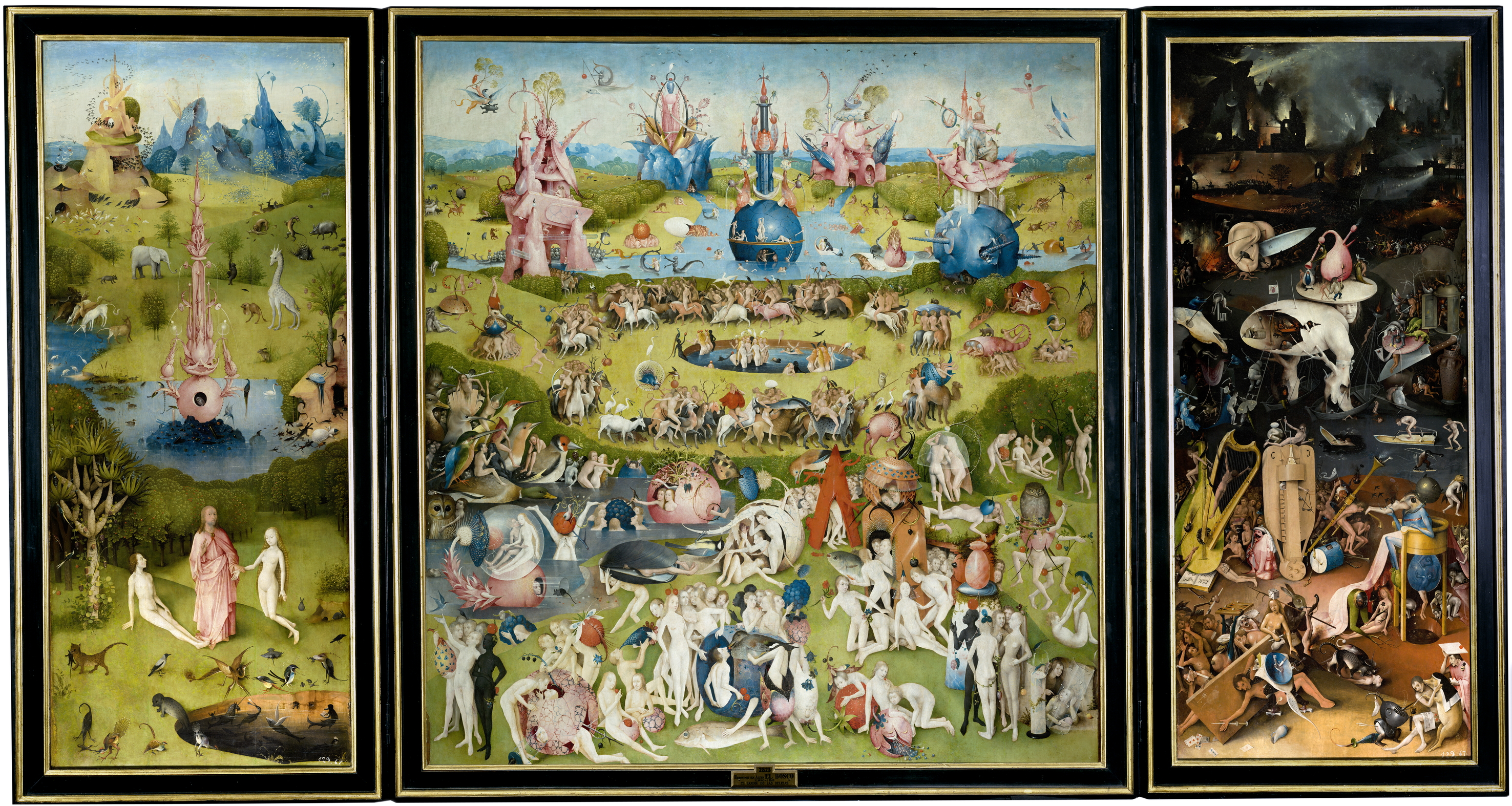
English: In the open triptych three scenes are included. The left panel is dedicated to Paradise, with the creation of Eve and the Fountain of Life, while the right one shows Hell.
The central panel gives its name to the ensemble, since in a garden are represented the delights or pleasures of life. Between Paradise and Hell, these delights are nothing but allusions to Sin, showing humanity given over to various worldly pleasures. The representations of Lust, with a strong erotic charge, are evident, together with others of a more enigmatic meaning. Through the fleeting beauty of flowers or the sweetness of fruits, a message of fragility is conveyed, of the ephemeral character of happiness and the enjoyment of pleasure. Certain groups seem to confirm this, such as the couple enclosed in a glass bubble on the left side, probably alluding to the Flemish saying: “Happiness is like glass, it breaks quickly.” The closed triptych represents in grisaille the third day of the creation of the World, with God the Father as Creator, according to the inscriptions on each panel: “He himself said it and everything was made” and “He himself commanded it and everything was created” Genesis (1:9–13). A work of moralizing character, it is one of Bosch’s most enigmatic, complex and beautiful creations, made in the last stage of his life. Acquired in the auction of the prior don Fernando, natural son of the great Duke of Alba, Philip II took it to El Escorial in 1593. Español: En el tríptico abierto se incluyen tres escenas. La tabla izquierda está dedicada al Paraíso, con la creación de Eva y la Fuente de la Vida, mientras la derecha muestra el Infierno. La tabla central da nombre al conjunto, al representarse en un jardín las delicias o placeres de la vida. Entre Paraíso e Infierno, estas delicias no son sino alusiones al Pecado, que muestran a la humanidad entregada a los diversos placeres mundanos. Son evidentes las representaciones de la Lujuria, de fuerte carga erótica, junto a otras de significado más enigmático. A través de la fugaz belleza de las flores o de la dulzura de las frutas, se transmite un mensaje de fragilidad, del carácter efímero de la felicidad y del goce del placer. Así parecen corroborarlo ciertos grupos, como la pareja encerrada en un globo de cristal en el lado izquierdo, en probable alusión al refrán flamenco: “La felicidad es como el vidrio, se rompe pronto”. El tríptico cerrado representa en grisalla el tercer día de la creación del Mundo, con Dios Padre como Creador, según sendas inscripciones en cada tabla: “Él mismo lo dijo y todo fue hecho” y “Él mismo lo ordenó y todo fue creado” Génesis (1:9-13). Obra de carácter moralizante, es una de las creaciones más enigmáticas, complejas y bellas de El Bosco, realizada en la última etapa de su vida. Adquirida en la almoneda del prior don Fernando, hijo natural del gran duque de Alba, Felipe II la llevó a El Escorial en 1593.
Français : Ce tryptique de Jérôme Bosch serait un speculum nuptiarum , c'est-à-dire un miroir nuptial, œuvre dont le but est d'instruire les nouveaux mariés sur l'importance du respect des liens du mariage. Néanmoins, il pourrait être un miroir aux princes, c'est-à-dire qu'elle constituerait une banque d’images-souvenirs provoquant la discussion entre les membres de la cour dans le but de les former moralement à leurs futures fonctions de gouvernants.Italiano: Nel trittico aperto sono incluse tre scene. La tavola sinistra è dedicata al Paradiso, con la creazione di Eva e la Fonte della Vita, mentre quella destra raffigura l’Inferno. La tavola centrale dà il nome all’insieme, poiché in un giardino sono rappresentate le delizie o i piaceri della vita. Tra Paradiso e Inferno, queste delizie non sono altro che allusioni al Peccato, che mostrano l’umanità abbandonata ai diversi piaceri mondani. Sono evidenti le rappresentazioni della Lussuria, dalla forte carica erotica, accanto ad altre di significato più enigmatico. Attraverso la bellezza fugace dei fiori o la dolcezza dei frutti si trasmette un messaggio di fragilità, del carattere effimero della felicità e del godimento del piacere. A conferma di ciò sembrano stare alcuni gruppi, come la coppia rinchiusa in una bolla di vetro sul lato sinistro, in probabile allusione al proverbio fiammingo: “La felicità è come il vetro, si rompe in fretta”. Il trittico chiuso rappresenta in grisaglia il terzo giorno della creazione del Mondo, con Dio Padre come Creatore, secondo le iscrizioni su ciascuna tavola: “Egli stesso lo disse e tutto fu fatto” e “Egli stesso lo comandò e tutto fu creato” Genesi (1, 9-13). Opera di carattere moralizzante, è una delle creazioni più enigmatiche, complesse e belle di Bosch, realizzata nell’ultima fase della sua vita. Acquistata nella vendita all’asta del priore don Fernando, figlio naturale del grande duca d’Alba, Filippo II la portò all’Escorial nel 1593. |
|||||||||||||||||||||||||||
| Depicted people | ||||||||||||||||||||||||||||
| Date | between 1500 and 1505 | |||||||||||||||||||||||||||
| Medium |
Español: Óleo y grisalla sobre tabla Français : Huile sur bois (chêne) |
|||||||||||||||||||||||||||
| Dimensions | height: 220 cm (86.6 in); width: 386 cm (12.6 ft) | |||||||||||||||||||||||||||
| Collection |
|
|||||||||||||||||||||||||||
| Current location |
Madrid |
|||||||||||||||||||||||||||
| Accession number |
P02823 |
|||||||||||||||||||||||||||
| Place of creation | Netherlands | |||||||||||||||||||||||||||
| Object history |
|
|||||||||||||||||||||||||||
| References |
|
|||||||||||||||||||||||||||
| Authority file | ||||||||||||||||||||||||||||
| Source/Photographer | Galería online, Museo del Prado. | |||||||||||||||||||||||||||
| Other versions |
|
|||||||||||||||||||||||||||


Licensing
|
This is a faithful photographic reproduction of a two-dimensional, public domain work of art. The work of art itself is in the public domain for the following reason:
The official position taken by the Wikimedia Foundation is that "faithful reproductions of two-dimensional public domain works of art are public domain".
This photographic reproduction is therefore also considered to be in the public domain in the United States. In other jurisdictions, re-use of this content may be restricted; see Reuse of PD-Art photographs for details. | ||||

File history
Click on a date/time to view the file as it appeared at that time.
| Date/Time | Thumbnail | Dimensions | User | Comment | |
|---|---|---|---|---|---|
| current | 12:06, 21 November 2015 | | 2,952 × 1,574 (5.44 MB) | wikimediacommons>Alonso de Mendoza | User created page with UploadWizard |
File usage
The following page uses this file:


